Zimbabwe, Southern Africa · Damien Manuhwa
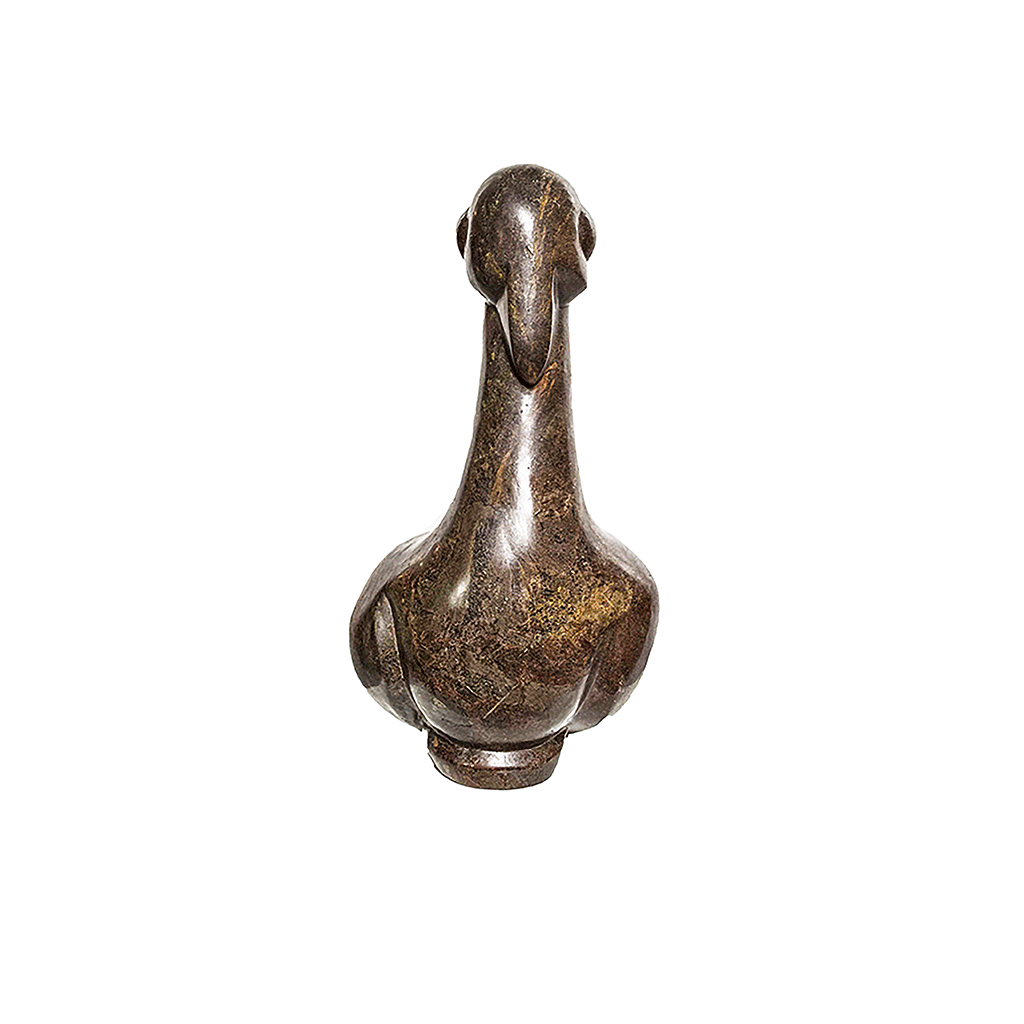
The Bird
Piece #S021 · Year Made: 1991
$2,550
Shipping individually quoted
Origin
Zimbabwe, Southern Africa
Period
Late 20th Century
Medium
Hand Carved Serpentine Stone
Length
7"
Width
4"
Height
14"
Details & Materials
The bird sits plump and satisfied, chest forward, wings folded neatly into its sides, its long beak curved down to rest against its breast. Damien Manuhwa draws his subjects from the natural world of man and animal, and from the spiritual world that explains them both; his work often moves between the two, humans becoming animals and back again. This one stays all bird, and happily so.
The stone is warm brown, flecked with gold across the chest, and the figure balances on a small round base. It measures 14 inches tall and 7 inches wide.
- Condition: Excellent, not previously owned, undamaged
- Sourcing: Fair Trade
- Certificate of Authenticity: Available Upon Request
- Provenance Report: Available Upon Request
Shipping
Buy now and leave the shipping to us. At checkout you pay for the piece plus a shipping deposit. We then plan the packing for your piece and email you the remaining shipping balance. This applies to both domestic and international orders. Every shipment is tracked, and most deliveries need a signature.
- Domestic: 5-8 business days
- International: 10-14 business days
- White-glove delivery available on request
Care & Placement
Dust with a soft, dry cloth.
Can be placed indoors or outdoors; weather will not damage it. Place on a solid, level surface or pedestal
Origin
Zimbabwe
Southern Africa
"When I was first exposed to African art, I felt a deep connection to it. It is hard to explain. It resonates with me spiritually."
Michael, Founder
York's Shona Gallery was the first in New York City to bring African sculpture to American collectors. Every piece in our collection is acquired directly, ensuring authenticity and fair exchange with the artists and communities who create them.
About the Artist
Damien Manuhwa
Stone Sculpture
Damian Manuhwa was born in 1952 in the Rusape District of Zimbabwe. His father, Fabian Manuhwa, carved in wood and Damian himself began to carve while still in school. It was seeing the work in stone of Joram Mariga, however, that prompted Manuhwa to begin sculpting in stone, and in 1970 he joined the National Gallery’s Workshop School which had been established by Frank McEwen, first Director of the National Gallery.
In the 1970s, the development of Shona sculpture suffered the twin blows of Frank McEwen’s departure and the international isolation of the country during the civil war. Manuhwa, being a new and young artist at that time, was forced to abandon his efforts to establish himself as a sculptor. But his urge to devote all his time to sculpting remained, and in 1980, the year of Zimbabwe’s independence, he resumed his sculpting career. Since then, Manuhwa has rapidly established himself as a leading figure among Zimbabwe’s community of sculptors.
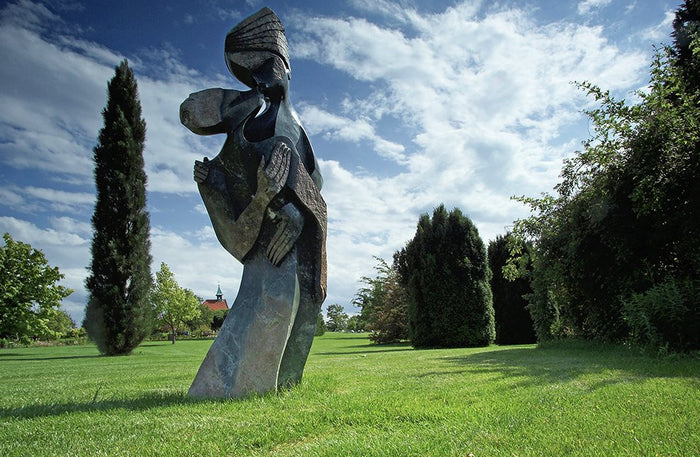
His subjects are drawn largely from the natural world of man and animal, and from the spiritual world which is the source of explanation for the events of the world that man inhabits. Manuhwa’s work ranges from depictions of man and his varied emotions to the creation of abstract but aesthetically pleasing forms. Like most leading Zimbabwean artists, his work frequently shows metamorphoses between humans and animals.
Manuhwa first visited America in 1987 and, more recently, in 1997, he attended an international sculpture workshop in Oregon, but his work has not been significantly altered by such exposure. Some say that Shona sculpture represents an art form that has survived, or rather has been reborn, with its sense of spiritual and social values intact. The work of Manuhwa and other major Zimbabwean artists is testimony to this reality. They remain true to ancient values and are not swayed unduly by external influences. This does not, however, mean an absence of concern for contemporary issues.
Stylistically amongst the most diverse of leading Zimbabwean sculptors, Manuhwa’s work also incorporates a diversity of subject matter -including social and other issues affecting contemporary Zimbabwean society.
In your home
Loading the room...
Surfaces
Pedestal
Styled with and outdoors
Rooms
The Tradition
Shona Stone Sculpture
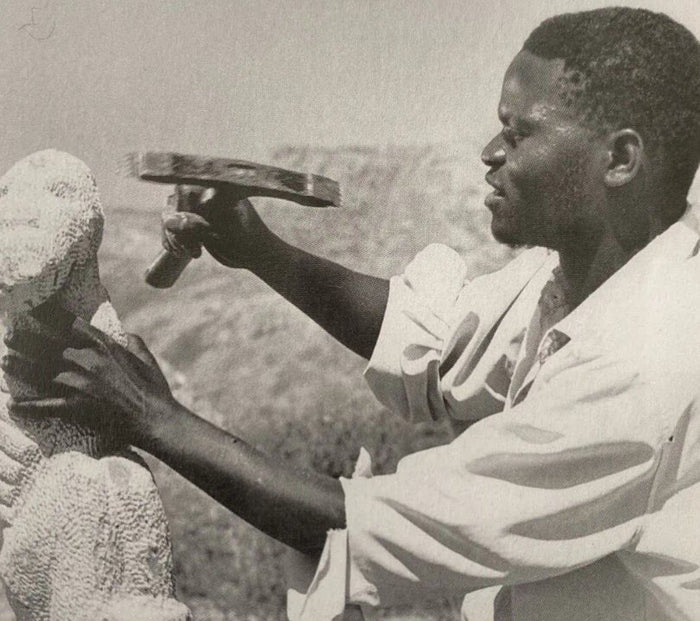
Shona sculpture is stone sculpture carved by hand in Zimbabwe, named after the Shona, the largest group of people in the country. The finest pieces keep the weight and stillness of the rock, while the figure within seems to rise out of it.
- Where
- Zimbabwe
- Roots
- An ancient stone city, 11th to 15th centuries
- Began
- Late 1950s in Harare, the capital of Zimbabwe
- Stone
- Spring stone, serpentine, lepidolite
- Subjects
- Family, spirits, animals, transformation
- In collections
- British Museum, Museum of Modern Art
- Finish
- Polished by hand, often left partly raw
Why Shona?
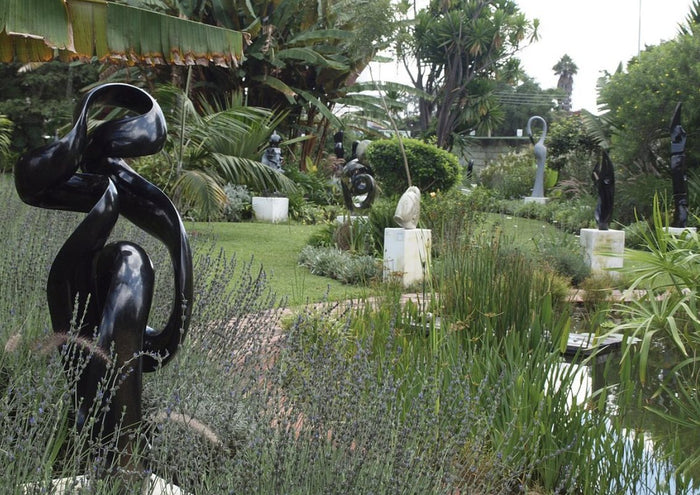
- Suitable for indoor and outdoor environments, such as a garden or terrace
- Durable and will not dull or erode
- One of a kind pieces
- Marked with artist’s signatures
- Hand carved in Zimbabwe
The stones we carry
Spring stone
Dense and very hard, it polishes to a deep, glassy black and weathers to pale grey where it is left raw
Serpentine
The most varied of Zimbabwe's stones, from olive green and brown to pink, rust and almost black, often within a single block
Lepidolite
A softer stone in shades of lilac and violet that glints in the light, prized for its rare color
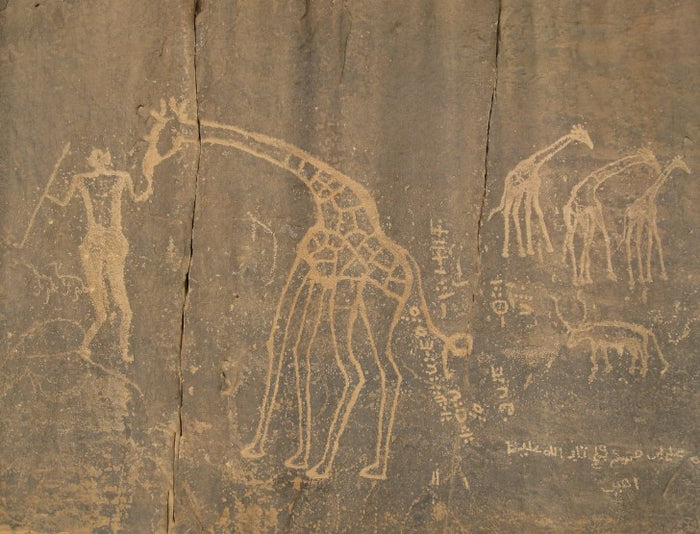
Animals in African Art
The Significance of Animals
In African art an animal is rarely just an animal. It can stand for a king, a clan, an ancestor or a lesson, and its meaning changes from one people to the next.
- Stands for
- Power, family, and a good harvest
- Teaches
- Right from wrong
- Seen in
- Masks, brass figures, stone and wood sculpture
Animal symbols
Nigeria
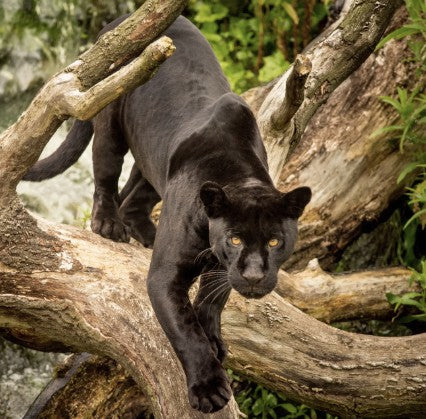
Leopard
A symbol of the king
Cameroon
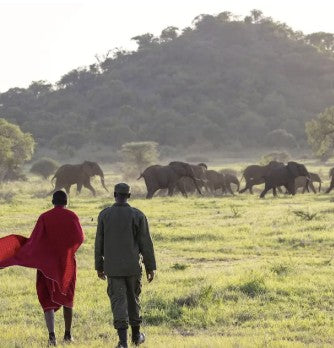
Elephant
A symbol of power
Mali
Antelope
A symbol of farming and a good harvest
Zimbabwe
Lion
A family symbol for many Shona clans
Related Pieces
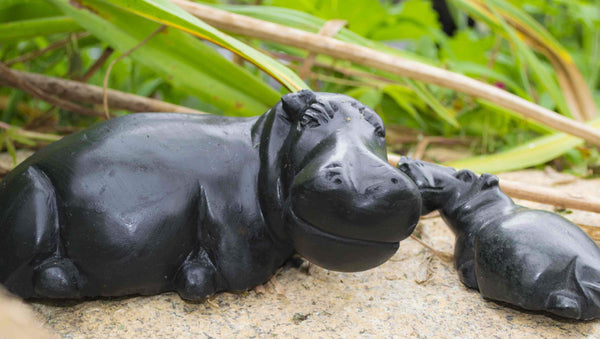
Zimbabwe, Southern Africa · Stone Sculpture
Hippos
$85
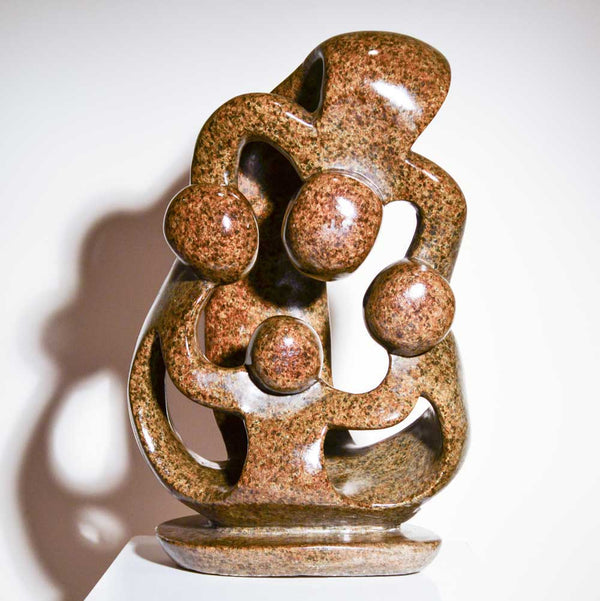
Zimbabwe, Southern Africa · Stone Sculpture
Family of Four
$3,540
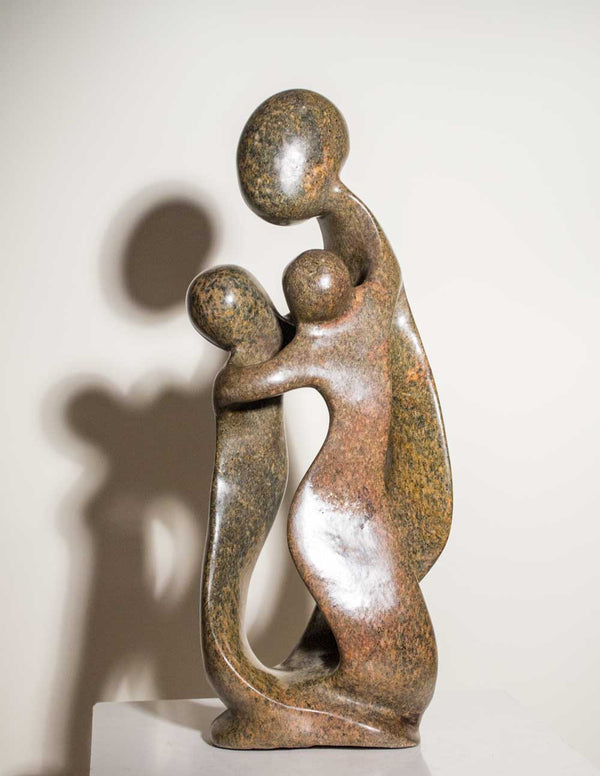
Zimbabwe, Southern Africa · Stone Sculpture
Family of Three
$1,850
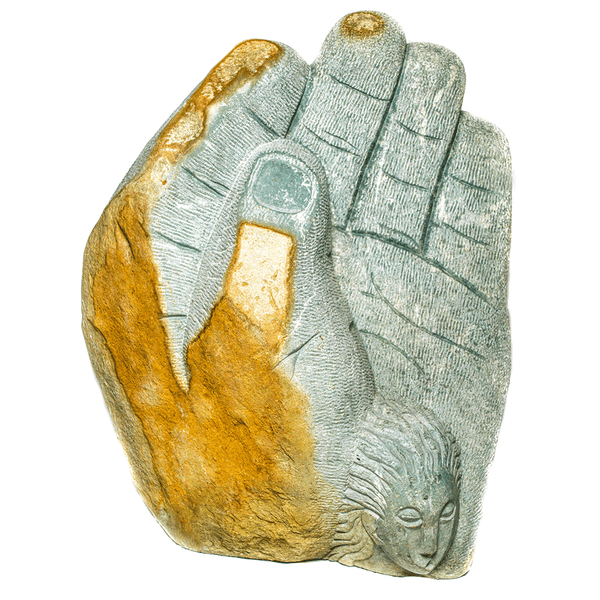
Zimbabwe, Southern Africa · Stone Sculpture
Lucky Hand
$19,995
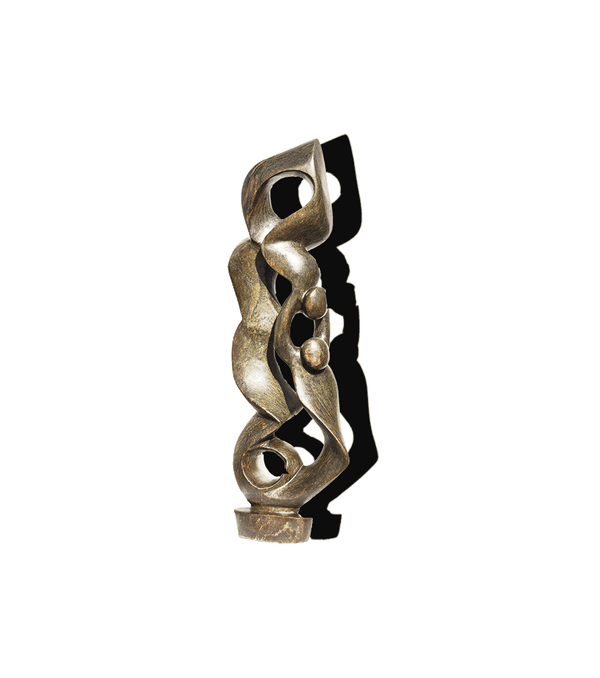
Zimbabwe, Southern Africa · Stone Sculpture
Mother and Child
$3,500
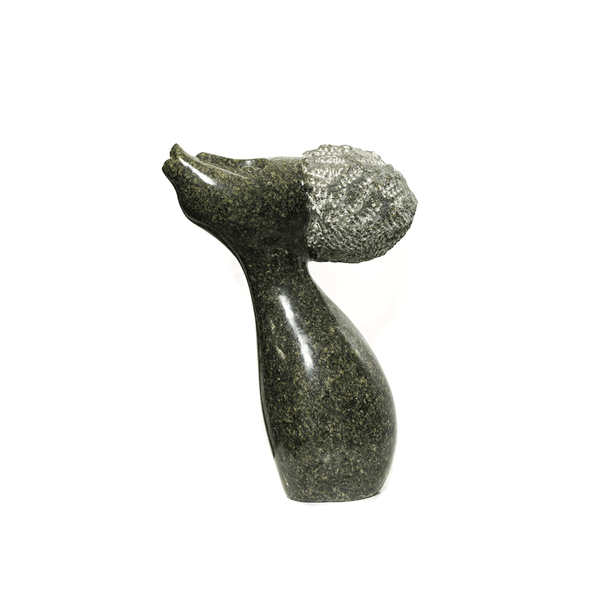
Zimbabwe, Southern Africa · Stone Sculpture
Proud Girl
$950
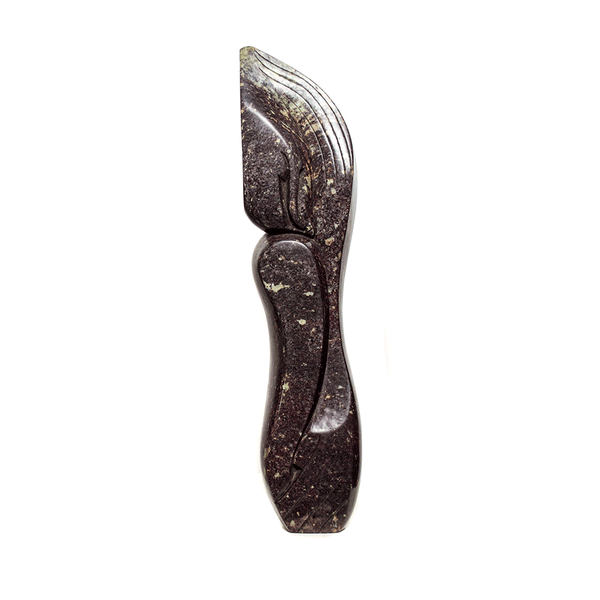
Zimbabwe, Southern Africa · Stone Sculpture
Shy Girl
$1,550
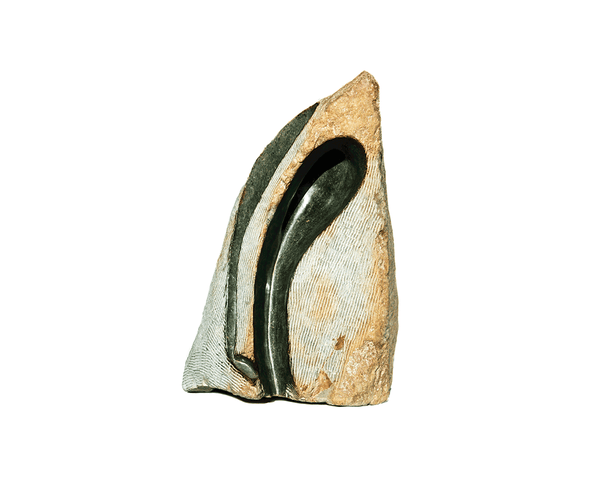
Zimbabwe, Southern Africa · Stone Sculpture
Swan
$4,995