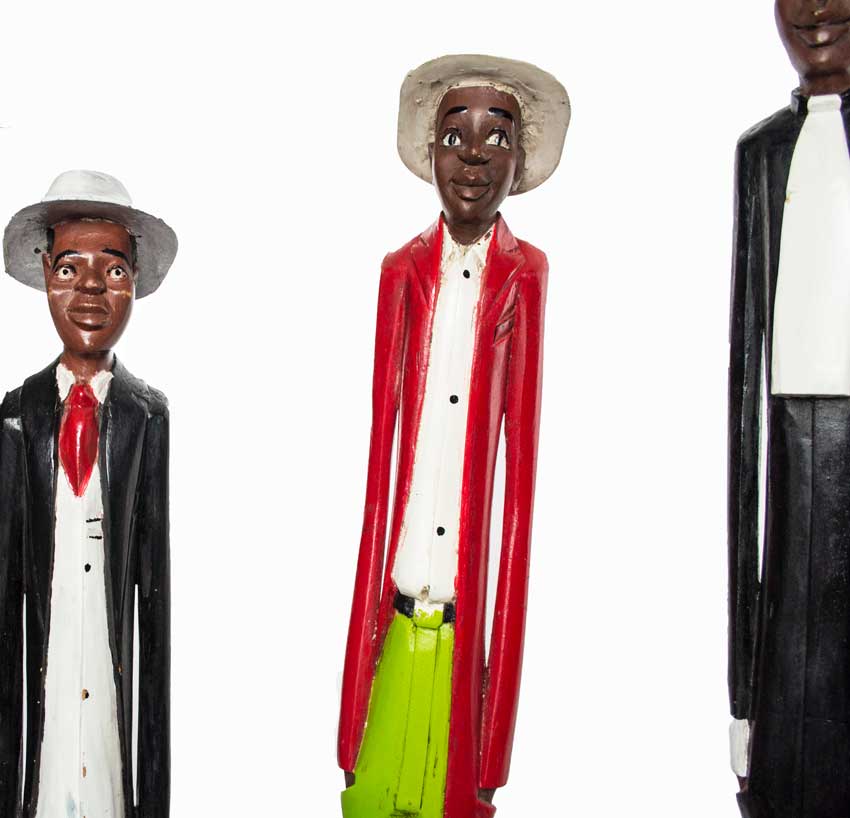
Ivory Coast, West Africa
Colonial People
Piece #S011 · Year Made: 1992
$499
Each figure sold individually
Shipping individually quoted
Origin
Ivory Coast, West Africa
Period
Late 20th Century
Medium
Hand Carved Wood
Width
5"
Height
39"
Details & Materials
"Colonial People" are figures that tell two stories at once. At first glance, the bright outfits and smiling faces give off a cheerful energy. Look longer and the figures turn somber: the sadness in the eyes, the forced smile, the hands held passively in pockets as they mirror the dress of the colonists.
Colonial, or "colon," figures originated in the Ivory Coast during the colonial period, carved for indigenous use rather than for market. They depict European officials, soldiers, doctors, and Westernized Africans in European clothing and posture. The genre earned worldwide acclaim after decolonization, and scholars still debate whether the original figures were satire, ritual objects, or simply new subjects rendered in local styles. Available in three heights: 39, 59, and 61 inches. Only a few pieces remain.
- Condition: Excellent, not previously owned, undamaged
- Sourcing: Fair Trade
- Certificate of Authenticity: Available Upon Request
- Provenance Report: Available Upon Request
Shipping
Buy now and leave the shipping to us. At checkout you pay for the piece plus a shipping deposit. We then plan the packing for your piece and email you the remaining shipping balance. This applies to both domestic and international orders. Every shipment is tracked, and most deliveries need a signature.
- Domestic: 5-8 business days
- International: 10-14 business days
- White-glove delivery available on request
Care & Placement
Dust with a soft, dry cloth. Keep it out of direct sunlight, away from radiators, dampness, and any sudden change of temperature. Do not place in extremely cold areas.
Place the piece on a level surface
Origin
Ivory Coast
West Africa
"When I was first exposed to African art, I felt a deep connection to it. It is hard to explain. It resonates with me spiritually."
Michael, Founder
York's Shona Gallery was the first in New York City to bring African sculpture to American collectors. Every piece in our collection is acquired directly, ensuring authenticity and fair exchange with the artists and communities who create them.
In your home
Loading the room...
Surfaces
Pedestal
Styled with and outdoors
Rooms
The Tradition
African Wood Carving
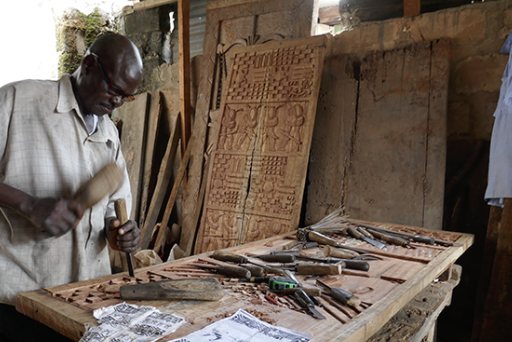
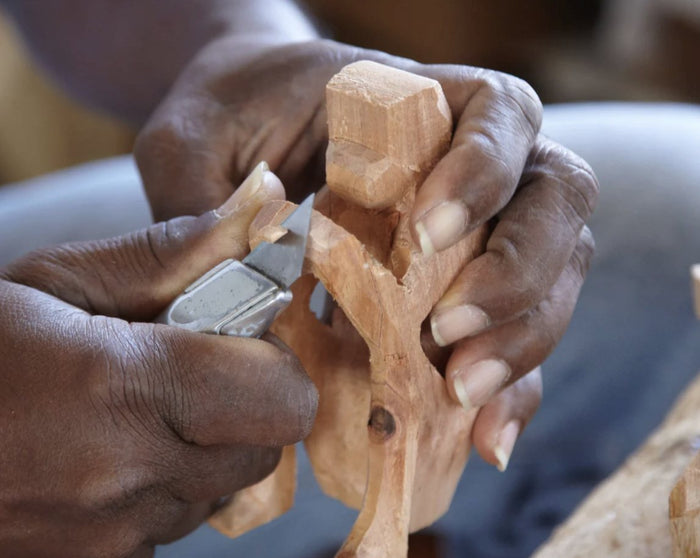
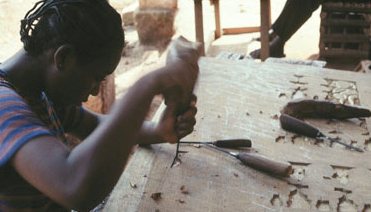
Wood has long been the great sculptural material of Africa. Carved from a single trunk, each piece carries the grain of the living tree and the marks of the hands and tools that shaped it.
- Wood
- Ebony, teak, jarrah, cherry and local hardwoods
- Made
- By hand, from a single block
- Tools
- Adze, knife and chisel
- Made for
- Ceremony, decoration and storytelling
The woods we carry
Ebony wood
A dense, heavy wood that grows slowly, with an almost black heart and pale outer wood from the same log that carvers often use together in one piece
Teak wood
A strong hardwood of warm golden brown, resistant to weather, that deepens in tone with age
Jarrah wood
A very dense, deep red hardwood that darkens to a rich reddish brown as it ages
Cherry wood
A wood with a fine, even grain and a warm reddish tone that grows richer the longer it is exposed to light
Related Pieces
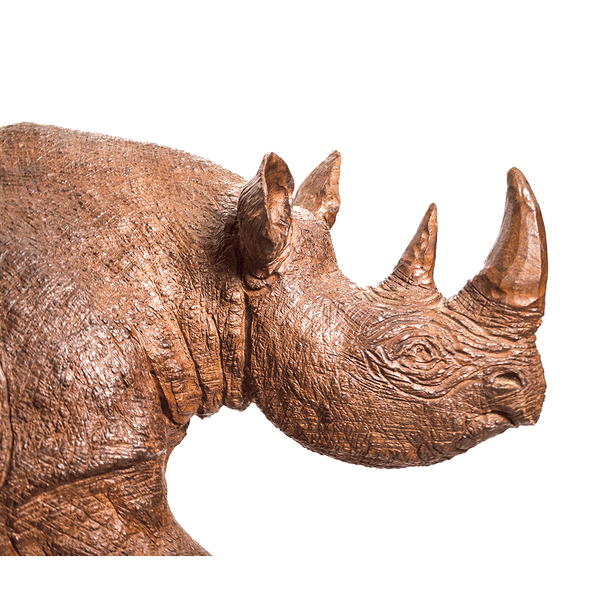
Kenya, East Africa · Wood Sculpture
Rhino
$3,999
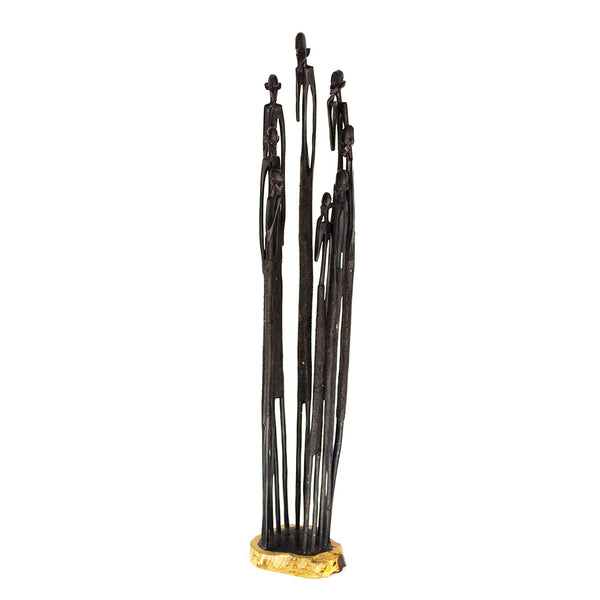
Kenya, East Africa · Wood Sculpture
Masaai Tribe
$3,200
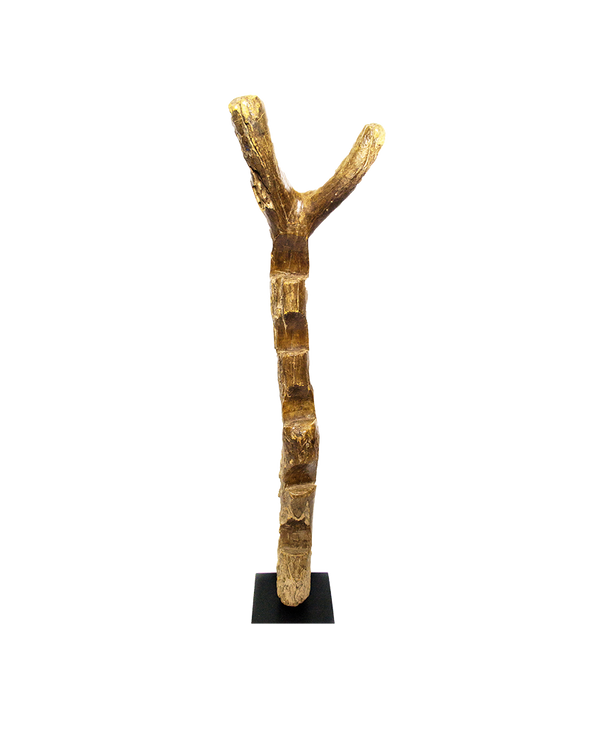
Mali, West Africa · Wood Sculpture
Ladder
$3,199
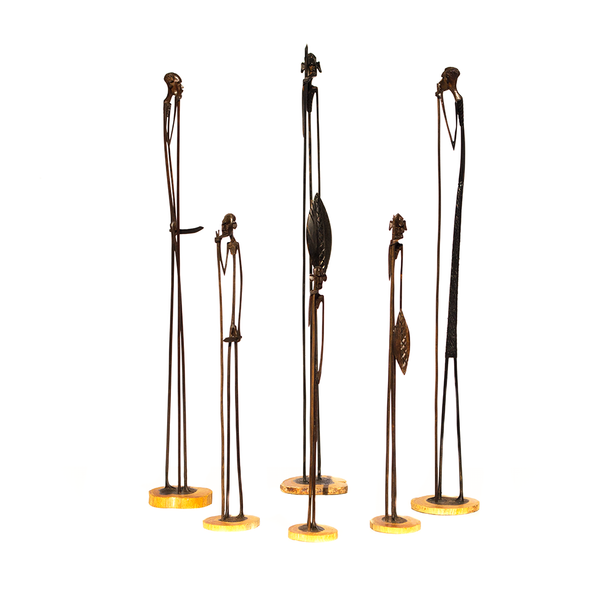
Kenya, East Africa · Wood Sculpture
Masaai People
$159
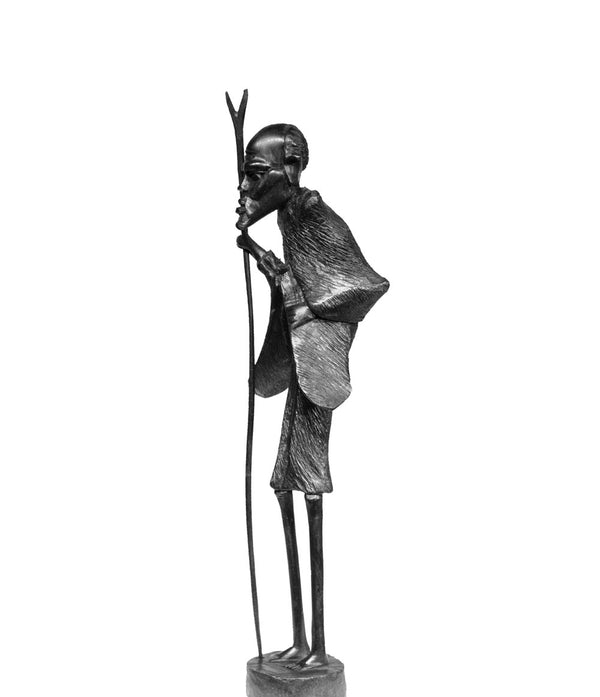
Kenya, East Africa · Wood Sculpture
Masaai Old Man
$275
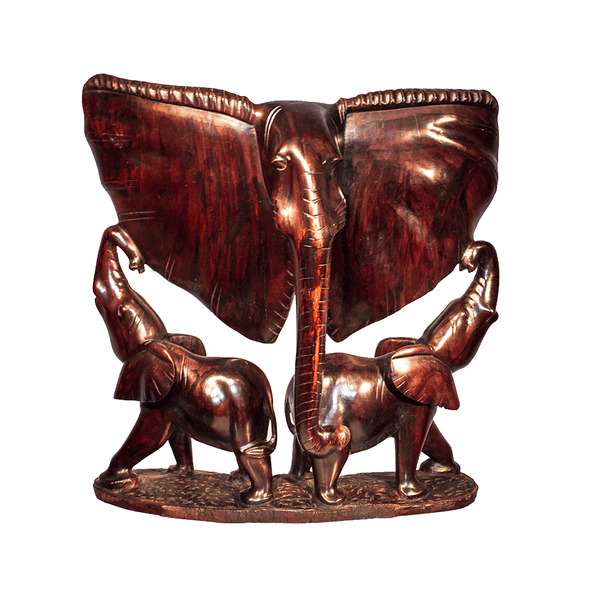
Kenya, East Africa · Wood Sculpture
Mother and Children
$1,999
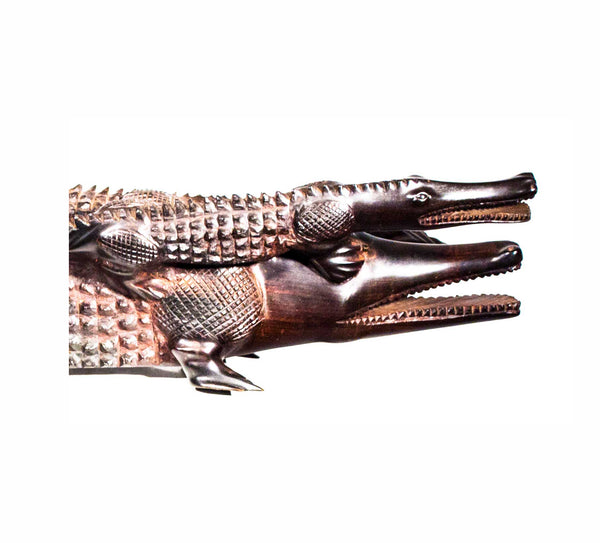
Kenya, East Africa · Wood Sculpture
Crocodile
$2,999
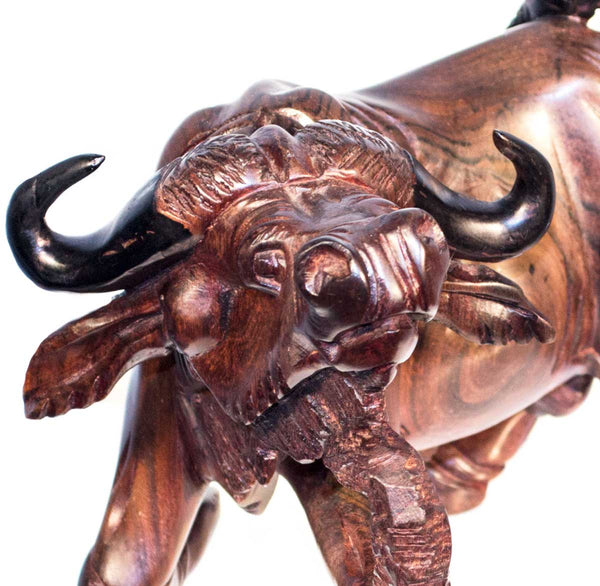
Kenya, East Africa · Wood Sculpture
Buffalo
$1,499