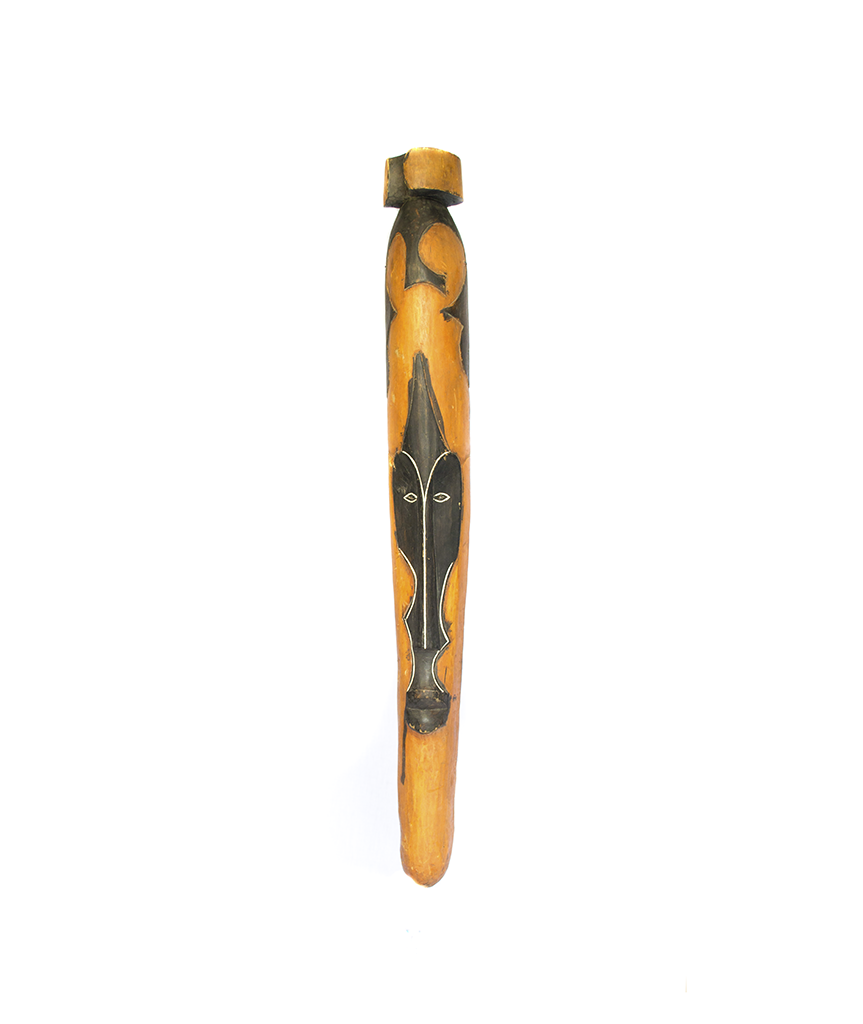
Cameroon, Central Africa · Fang Tribe
Fang Mask
Piece #M013 · Year Made: 1987
$250
Shipping individually quoted
Origin
Cameroon, Central Africa
Period
Late 20th Century
Medium
Hand Carved Wood
Length
5"
Width
3"
Height
42"
Details & Materials
York's Shona Gallery presents the "Fang Mask" by the Fang tribe of Cameroon. Its small, dark face is carved near the top of a long, narrow plank of wood, and its features are outlined in black.
The mask is hand carved from wood and was made in 1987. The wood has a warm, natural orange-tan tone.
Fang masks are worn by itinerant troubadours. They are also used for hunting and punishing sorcerers.
Fang masks were acquired and relished by modernist artists such as Picasso and Matisse. The African pieces, Picasso said, helped him to understand his purpose as a painter, which was not to entertain with decorative images, but to meditate between perceived reality and the creativity of the human mind--to be freed or "exorcised" from fear of the unknown by giving form to it.
- Condition: Excellent, not previously owned, undamaged
- Sourcing: Fair Trade
- Certificate of Authenticity: Available Upon Request
- Provenance Report: Available Upon Request
Shipping
Buy now and leave the shipping to us. At checkout you pay for the piece plus a shipping deposit. We then plan the packing for your piece and email you the remaining shipping balance. This applies to both domestic and international orders. Every shipment is tracked, and most deliveries need a signature.
- Domestic: 5-8 business days
- International: 10-14 business days
- White-glove delivery available on request
Care & Placement
Dust with a soft, dry cloth. Keep it out of direct sunlight, away from radiators, dampness, and any sudden change of temperature. Do not place in extremely cold areas. It is light enough to hang on a few nails
Origin
Cameroon
Central Africa
"When I was first exposed to African art, I felt a deep connection to it. It is hard to explain. It resonates with me spiritually."
Michael, Founder
York's Shona Gallery was the first in New York City to bring African sculpture to American collectors. Every piece in our collection is acquired directly, ensuring authenticity and fair exchange with the artists and communities who create them.
About the Tribe
Fang Tribe
Mask
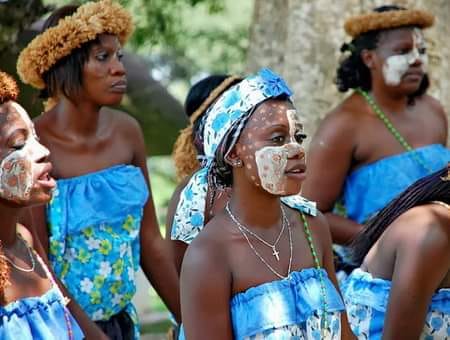
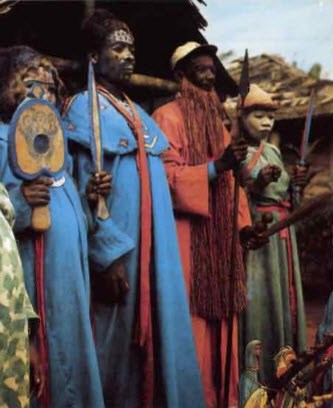
The Fang tribe are spread over a vast area along the Atlantic coast line of equatorial Africa and can be found in Cameroon equatorial Guinea and Gabon namely along the bank of the Ogowe river. They are principally hunters but also agriculturists. Their social structure is based on a clan, a group of individuals with a common ancestor. The ensemble of Fang peoples practice a cult devoted to ancestor lineages, the bieri, whose aim is to both protect themselves from the deceased and to recruit and aid in matters of daily life. This familial cult does not monopolize the Fang’s religious universe, for it coexists with other beliefs and rituals of a more collective character.
The bieri, gave rise to remarkable wooden sculpture. The bieri, or ancestor figure, would be consulted when the village was to change location, or when a new crop was planted, during a palaver, or before going hunting, fishing, or to war. But once separated from the reliquary chest, the sculpted object would lose its sacred value and could be destroyed. The ritual consisted of prayers, libations, and sacrifices offered to the ancestor, whose scull would be rubbed with powder and paint each time. With its large head, long body, and short extremities, the Fang bieri had the proportion of a newborn, thus emphasizing the group’s continuity with its ancestor and with the three classes of the society: the “not-yet-born,” the living, and the dead. The relics were essentially skull fragments, or sometimes complete skulls, jawbones, teeth and small bones. The bieri also served for therapeutic rituals and, above all, for the initiation of young males during the great so festival.
The Fang people used masks in their secret societies. Members of this male society wore the Ngil masks during the initiation of new members and the persecution of wrongdoers. Masqueraders, clad in raffia costumes and attended by helpers, would materialize in the village after dark, illuminated by flickering torchlight.
Masks, such as those worn by itinerant troubadours and for hunting and punishing sorcerers, are painted white with facial features outlined in black. Typical are large elongated masks covered with kaolin and featuring a face that was usually heart-shaped with a long fine nose. Apparently it have been linked with the dead, since white is their color. The Ngontang dance society also used white masks, sometimes in the form of a four-sided helmet shape with bulging forehead and eyebrows in heart-shaped arcs. Fang masks were acquired and relished by modernist artists such as Picasso and Matisse. The African pieces, Picasso said, helped him to understand his purpose as a painter, which was not to entertain with decorative images, but to meditate between perceived reality and the creativity of the human mind--to be freed or "exorcised" from fear of the unknown by giving form to it.
The So, or red antelope, was connected with initiation that lasted several months, the masks used during this ritual had long horns. Passport masks, much smaller masks, were attached to arms of the maskers.
In your home
Loading the room...
Surfaces
Pedestal
Styled with and outdoors
Rooms
The Tradition
Masks of Africa
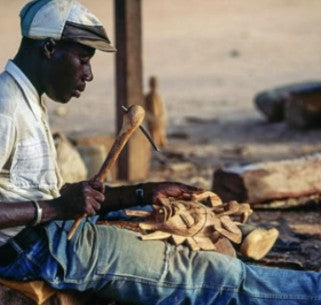
An African mask is made to be worn and danced. With a costume, music and movement, the carved face becomes a spirit or an ancestor, present for a time among the living.
- Worn at
- Funerals, harvests and initiations
- Made from
- Wood, often with paint, clay, fiber, cloth, shells or metal
- Made for
- Ceremony, dance and storytelling
Some masks in our collection
Burkina Faso
Mossi
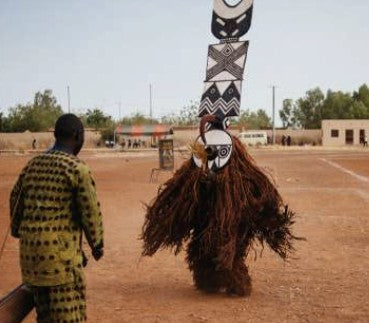
Tall masks with an antelope face and a plank above, tied to a clan and its founding animal
Burkina Faso
Bwa
Painted plank masks that show flying spirits, danced at funerals, harvests and initiations
Mali
Dogon
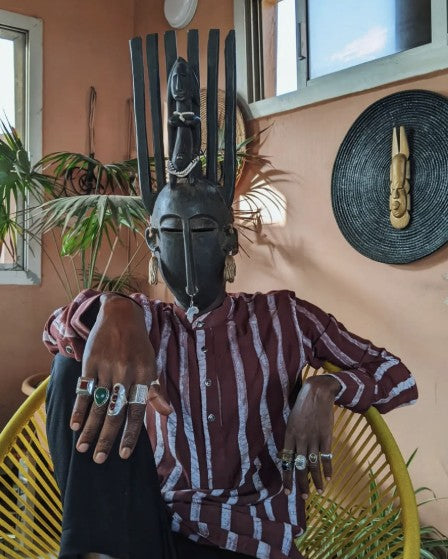
Danced at the dama, the ceremony that ends mourning and guides the dead to become ancestors
Gabon and Cameroon
Fang
Long pale faces made for the ngil society, which once acted as police and judges
Liberia and Ivory Coast
Dan
Masks that give form to forest spirits, with each performer called to his mask in a dream
Ivory Coast
Guro
Finely carved faces, often crowned with horns or a crest
Gabon and Congo
Kwele
Heart shaped faces with narrow eyes, carved to bring well being to the village
Ivory Coast and Ghana
Nafana
Large painted Bedu plank masks, danced during the Bedu festival
Related Pieces
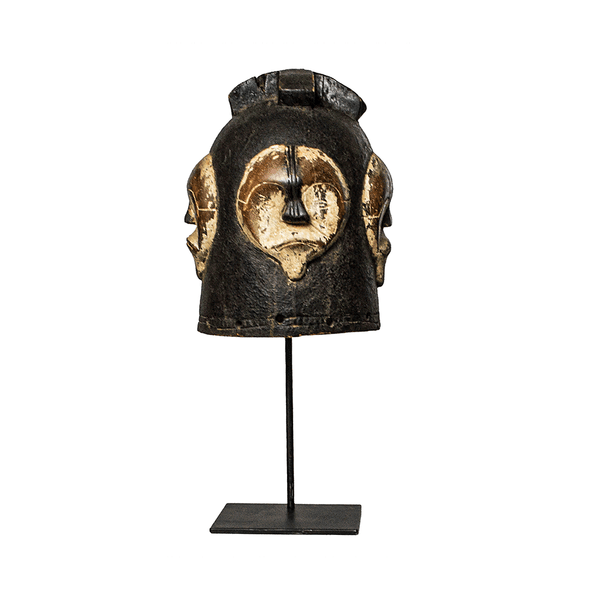
Cameroon, Central Africa · Mask
Helmet Mask
$650
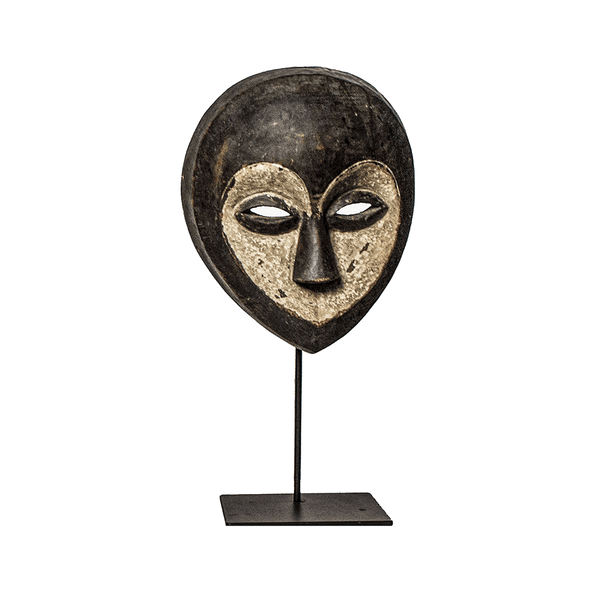
Cameroon, Central Africa · Mask
Kwele Mask
$450
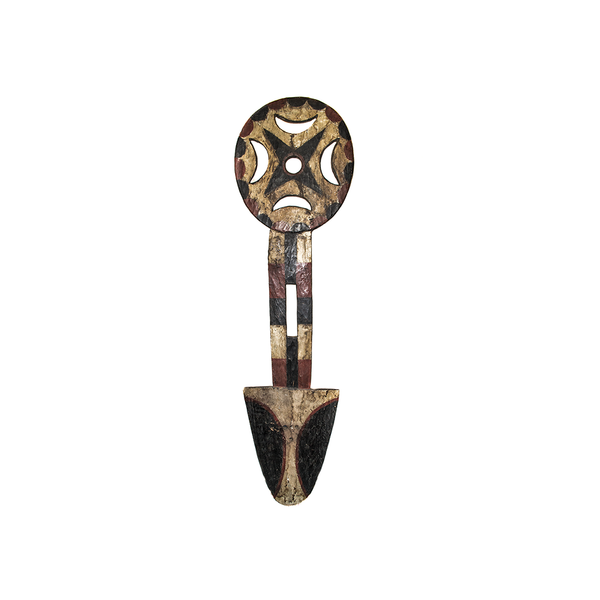
Ivory Coast, West Africa · Mask
Bedu Mask
$3,795
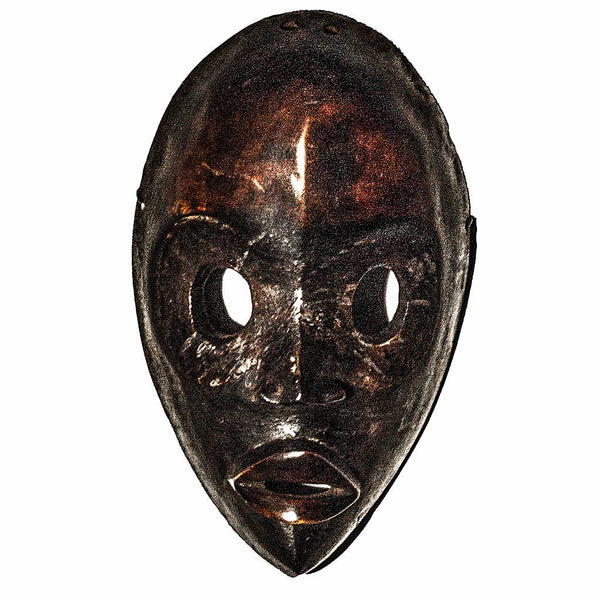
Ivory Coast, West Africa · Mask
Dan Mask
$250
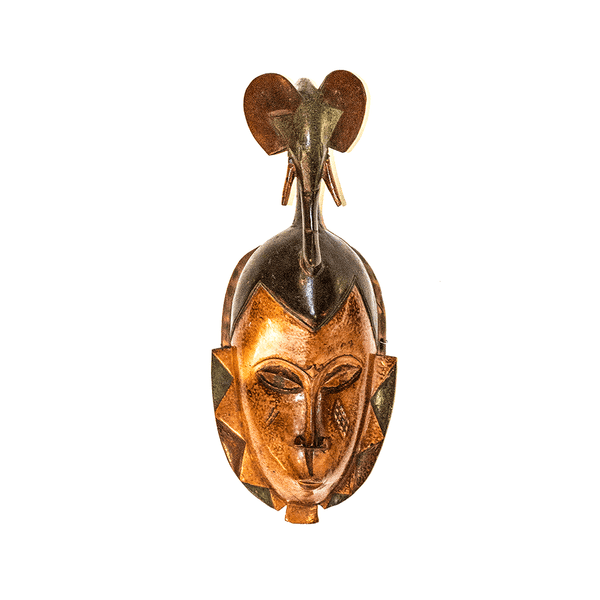
Ivory Coast, West Africa · Mask
Guro Mask
$250
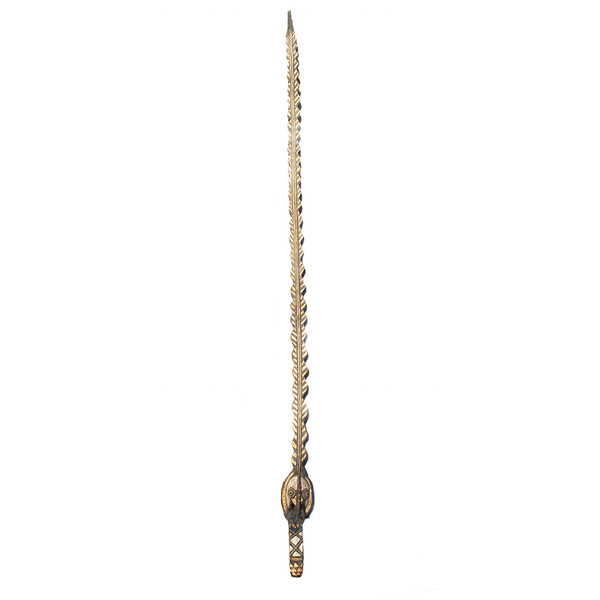
Burkina Faso, West Africa · Mask
Large Mossi Tribe Mask
$9,995
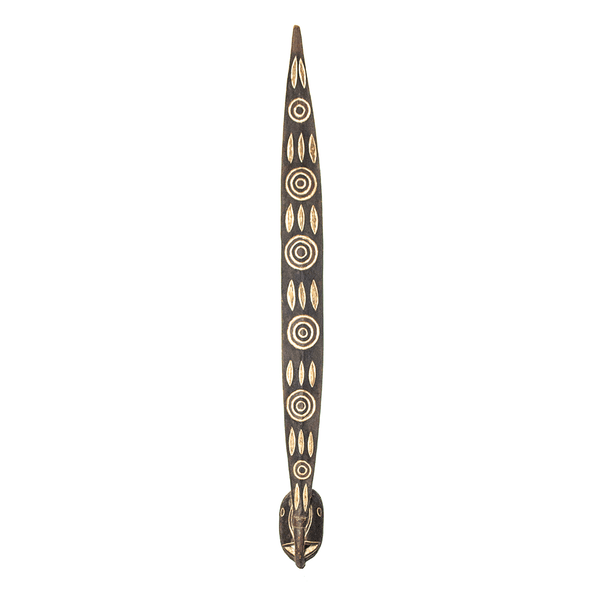
Burkina Faso, West Africa · Mask
Mask
$1,650
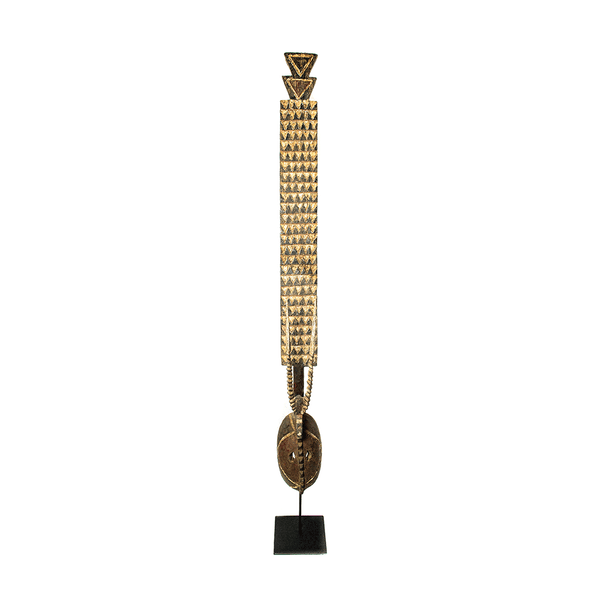
Burkina Faso, West Africa · Mask
Mossi Tribe Mask
$1,850