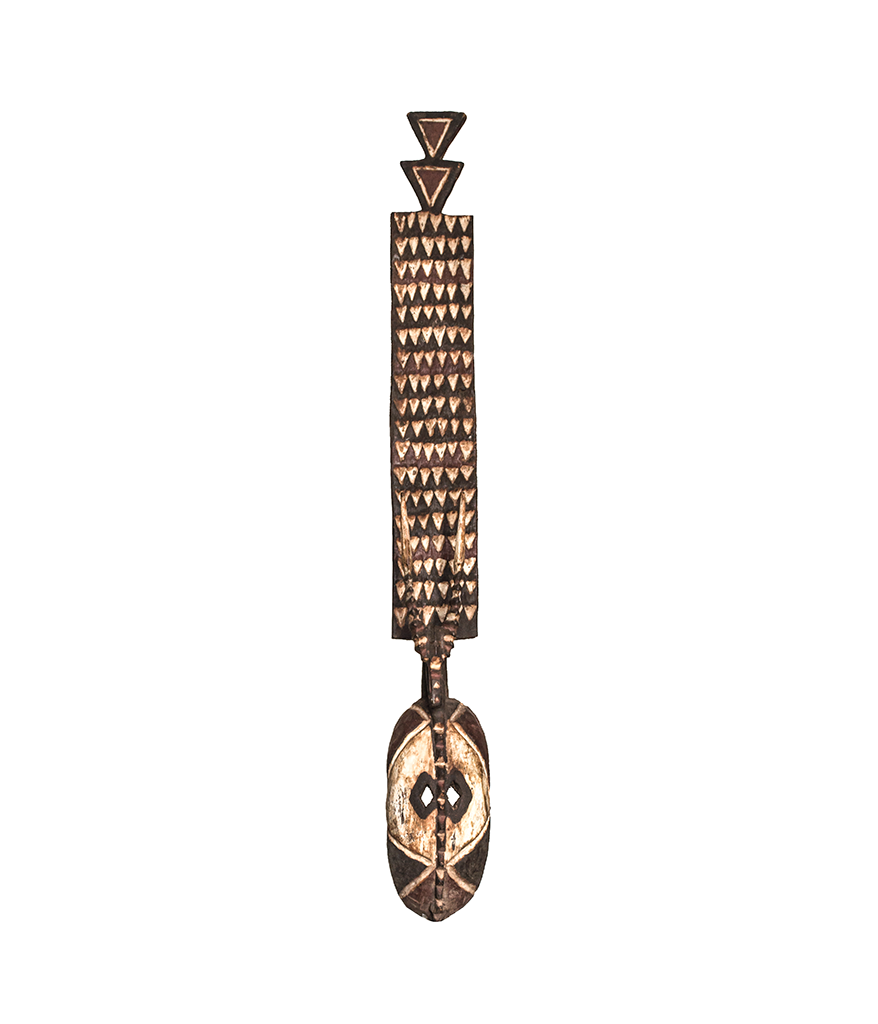
Burkina Faso, West Africa · Mossi Tribe
Mask
Piece #M011 · Year Made: 1957
$650
Shipping individually quoted
Origin
Burkina Faso, West Africa
Period
Mid-20th Century
Medium
Hand Carved Wood
Length
5"
Width
4"
Height
42"
Details & Materials
York's Shona Gallery presents "Mask" by the Mossi tribe of Burkina Faso. It depicts an oval face with diamond-shaped eyes. It sits at the base of a tall, narrow plank carved in checkered and zigzag patterns and topped with two stacked triangles.
The mask is hand carved from wood and was made in 1957.
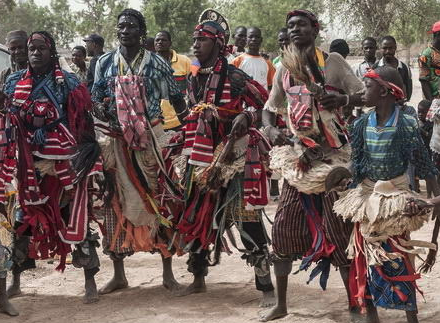
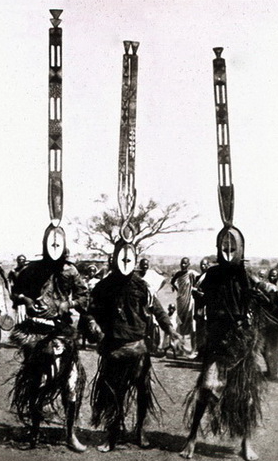
The Mossi use masks at burials, funerals, and initiations, and at annual year-end ancestral sacrifices. They represent spirits from the wild bush areas surrounding the village, which may appear to humans as animals. When masks are not being worn in performances, they are placed on ancestral shrines in the kimse roogo, or ancestral spirit house of the family that owns them. The spirits protect the family from disease, accident, natural disaster, drought, infertility, and generally ensure success in their life.
It is lightweight and can be mounted on the wall or displayed on the custom mask stand included with your purchase.
- Condition: Excellent, not previously owned, undamaged
- Sourcing: Fair Trade
- Certificate of Authenticity: Available Upon Request
- Provenance Report: Available Upon Request
Shipping
Buy now and leave the shipping to us. At checkout you pay for the piece plus a shipping deposit. We then plan the packing for your piece and email you the remaining shipping balance. This applies to both domestic and international orders. Every shipment is tracked, and most deliveries need a signature.
- Domestic: 5-8 business days
- International: 10-14 business days
- White-glove delivery available on request
Care & Placement
Dust with a soft, dry cloth. Keep it out of direct sunlight, away from radiators, dampness, and any sudden change of temperature. Do not place in extremely cold areas. It is light enough to hang on a few nails, or stand it on the stand included
Origin
Burkina Faso
West Africa
"When I was first exposed to African art, I felt a deep connection to it. It is hard to explain. It resonates with me spiritually."
Michael, Founder
York's Shona Gallery was the first in New York City to bring African sculpture to American collectors. Every piece in our collection is acquired directly, ensuring authenticity and fair exchange with the artists and communities who create them.
About the Tribe
Mossi Tribe
Mask
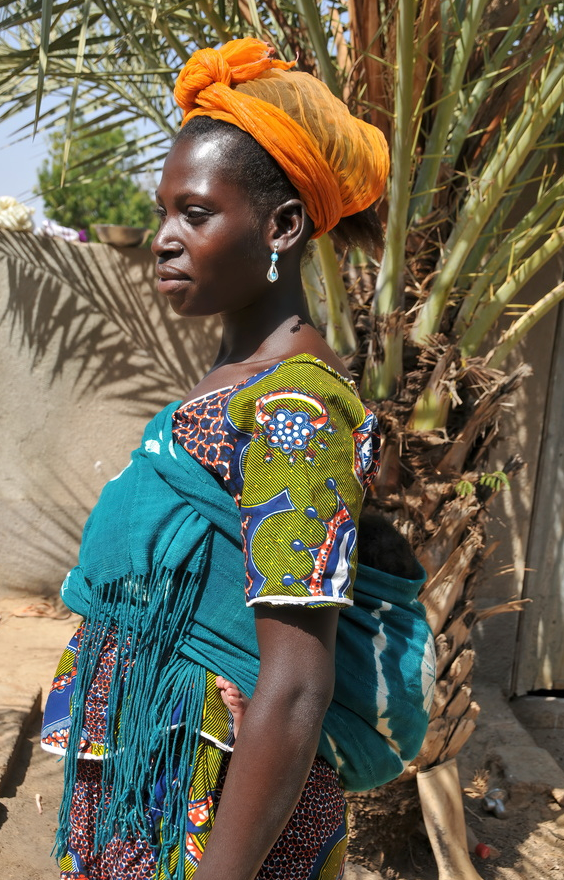
The Mossi are the largest tribe living in central Burkina Faso, West Africa. Burkina Faso is the new name of Upper Volta/Haute Volta as of 1983. They live mainly on the central plateau of Burkina Faso. The Mossi cultivate millet and cotton, and rear cattle in the northern Savannah regions. Some artisans, such as smiths and leatherworkers, belong to low-status castes.
The society, organized on the basis of a feudal kingdom, is divided into royalty, nobles, commoners and, formerly, slaves. Each village is governed by a chief who, in turn, is subordinate to a divisional chief. At the top of the hierarchy is the paramount ruler, the morho naba (“big lord”), whose seat is located at Ouagadougou. Divisional chiefs serve as advisers to the morho naba and theoretically choose his successor. Usually, however, the paramount chief’s eldest son is chosen.
The art of the Mossi tends toward a simplification that is not found among their neighbors, among them being the Dogon people. Mossi and Dogon art, however, shows many similiarties, such as the creation and use of plank masks—face masks with a high vertical superstructure. They are also known for their wooden dolls, crest, and brass figures. Examples of such art are held in numerous public collections.
The diversity of Mossi art styles reflects the diverse origins of the Mossi people. Rather than creating art forms in one more ethnic style, which can be illustrated as ‘archetypal’ or ‘textbook,’ the Mossi have created three major styles and several substyles, whose geographical distribution mirrors that of the several groups of farmers who were conquered by invaders in and about 1500 and amalgamated into a new group called Mossi.
The best known Mossi mask style is found in the northwestern Mossi kingdom called Yatenga, an area once occupied by the Dogon. Here, the nyonyose who remained behind when the majority of the Dogon fled to the Bandiagara cliffs were amalgamated into Mossi society. Their descendants carve masks that are vertically oriented, with a tall, slender plank that rises above the face of the mask and is often decorated with geometric patterns. The face is a concave oval, bisected vertically with a dentate ridge, often painted white. There are also masks surmounted by the female figure. There are also mask that depict animals such as the antelope, bush pig, hawk, hornbill, and crocodile. Some are not recognizable to human or animal forms, as these masks are a combination of both spirits.
The Mossi use masks at burials, funerals, and initiations, and at annual year-end ancestral sacrifices. They represent spirits from the wild bush areas surrounding the village, which may appear to humans as animals. When masks are not being worn in performances, they are placed on ancestral shrines in the kimse roogo, or ancestral spirit house of the family that owns them. The spirits protect the family from disease, accident, natural disaster, drought, infertility, and generally ensure success in their life.
Before modernization during the latter part of French rule and since independence (1960) the Mossi kingdom provided an example of a typical African realm. The king’s elaborate court, in addition to nobles and high officials, contained numerous bodyguards, page boys, and eunuchs; his wives lived in special villages, all of whose male inhabitants were eunuchs.
The Mossi people venerate their ancestors, whose spiritual presence both validates their claims to their land and provides a major mechanism of social control. They also pray to nature deities and propitiate them.
In your home
Loading the room...
Surfaces
Pedestal
Styled with and outdoors
Rooms
The Tradition
Masks of Africa
An African mask is made to be worn and danced. With a costume, music and movement, the carved face becomes a spirit or an ancestor, present for a time among the living.
- Worn at
- Funerals, harvests and initiations
- Made from
- Wood, often with paint, clay, fiber, cloth, shells or metal
- Made for
- Ceremony, dance and storytelling
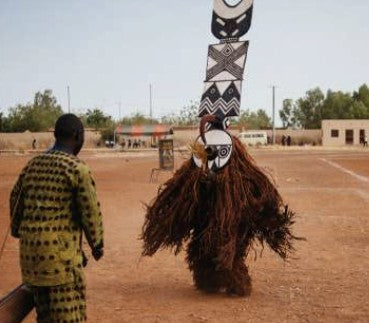
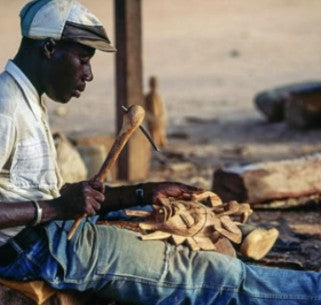
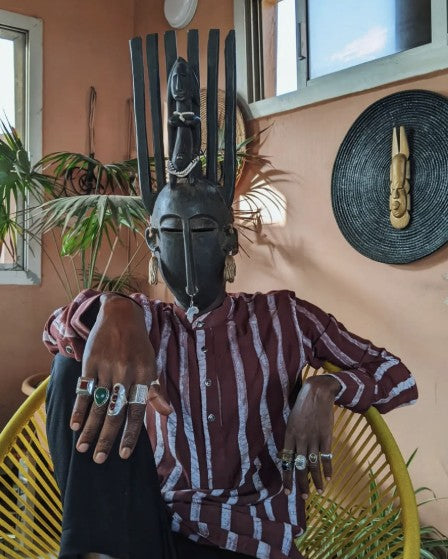
Some masks in our collection
Burkina Faso
Mossi
Tall masks with an antelope face and a plank above, tied to a clan and its founding animal
Burkina Faso
Bwa
Painted plank masks that show flying spirits, danced at funerals, harvests and initiations
Mali
Dogon
Danced at the dama, the ceremony that ends mourning and guides the dead to become ancestors
Gabon and Cameroon
Fang
Long pale faces made for the ngil society, which once acted as police and judges
Liberia and Ivory Coast
Dan
Masks that give form to forest spirits, with each performer called to his mask in a dream
Ivory Coast
Guro
Finely carved faces, often crowned with horns or a crest
Gabon and Congo
Kwele
Heart shaped faces with narrow eyes, carved to bring well being to the village
Ivory Coast and Ghana
Nafana
Large painted Bedu plank masks, danced during the Bedu festival
Related Pieces
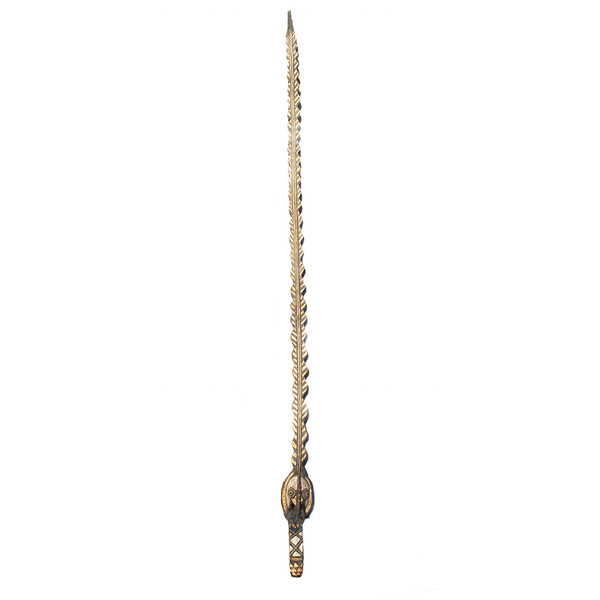
Burkina Faso, West Africa · Mask
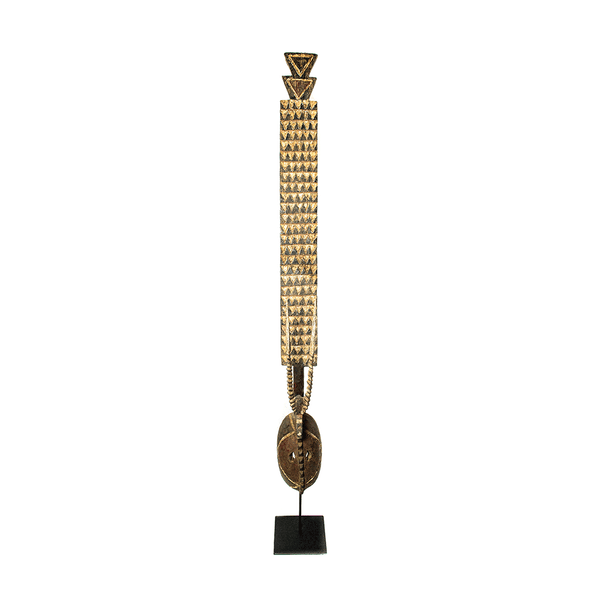
Large Mossi Tribe Mask
$9,995
Burkina Faso, West Africa · Mask
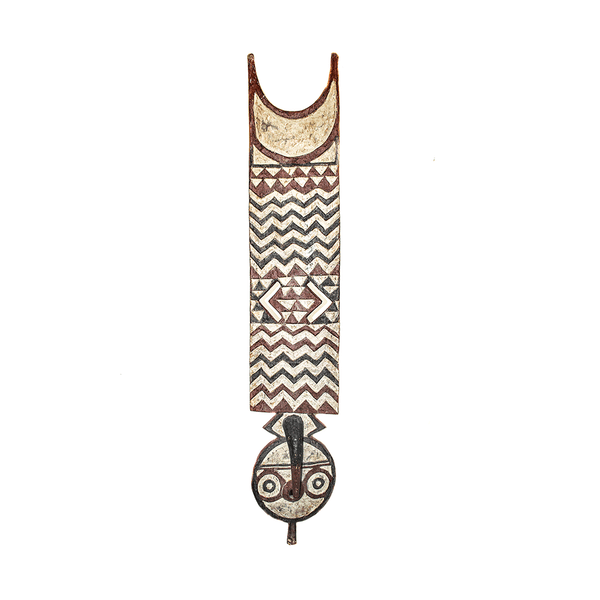
Mossi Tribe Mask
$1,850
Burkina Faso, West Africa · Mask
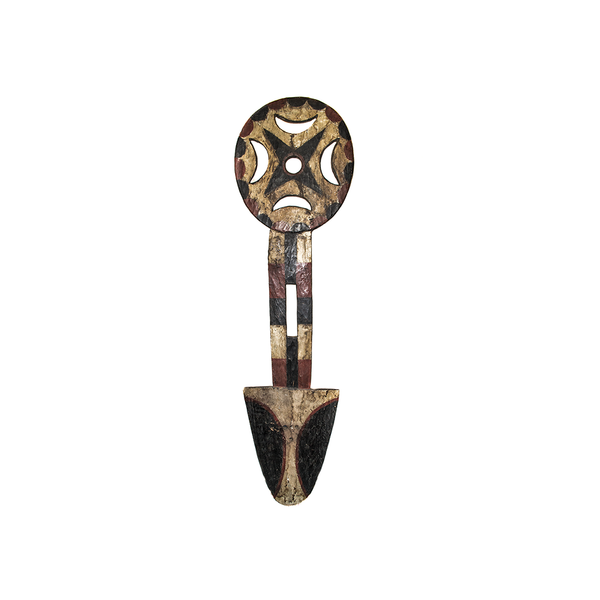
Plank Mask
$2,850
Ivory Coast, West Africa · Mask
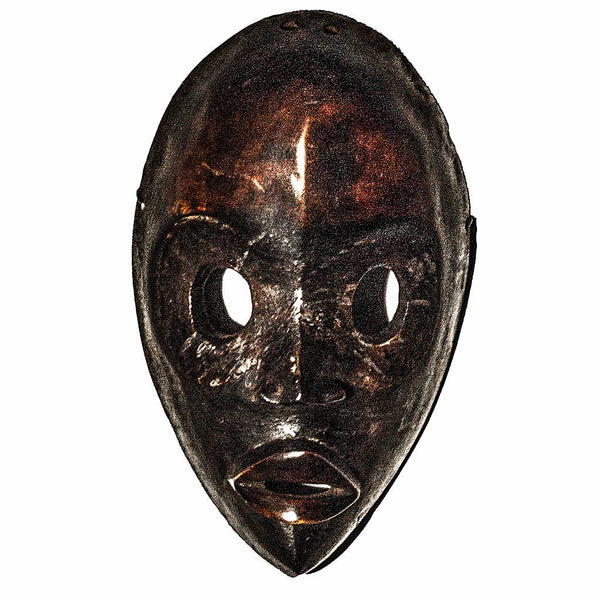
Bedu Mask
$3,795
Ivory Coast, West Africa · Mask
Dan Mask
$250
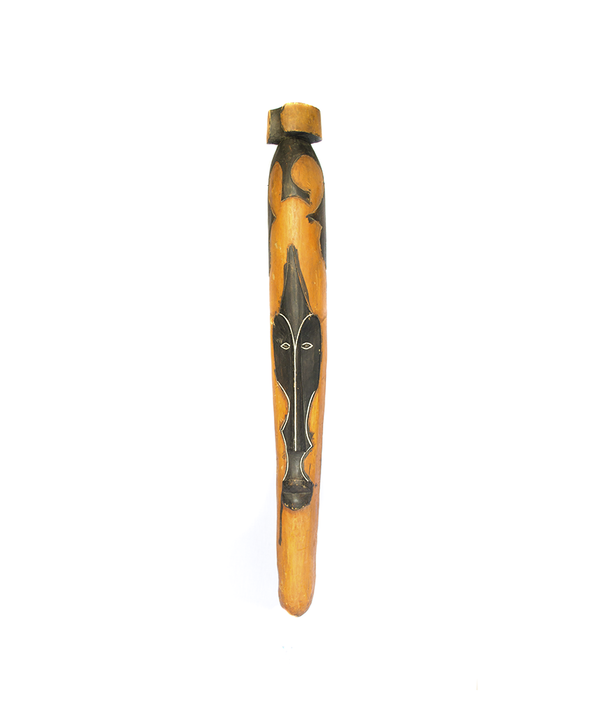
Cameroon, Central Africa · Mask
Fang Mask
$250
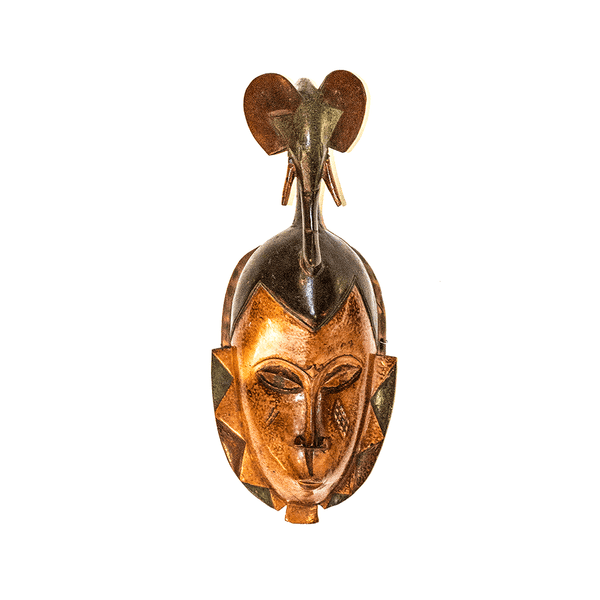
Ivory Coast, West Africa · Mask
Guro Mask
$250
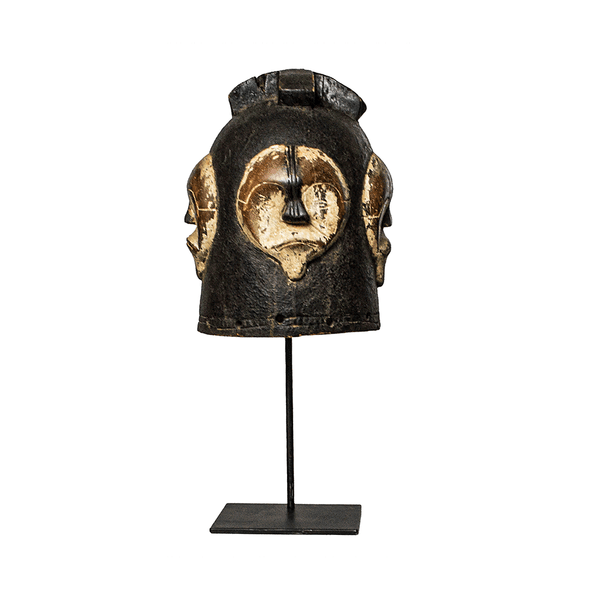
Cameroon, Central Africa · Mask
Helmet Mask
$650