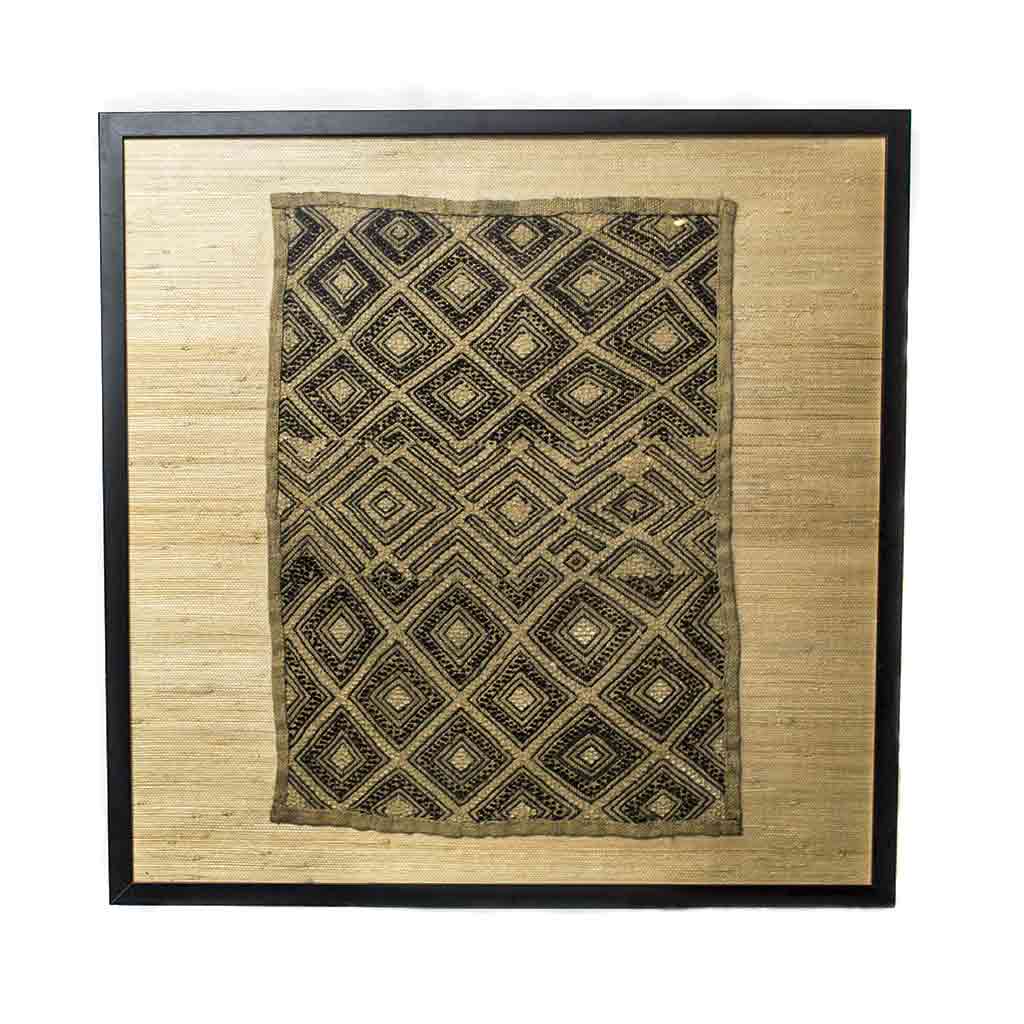
Democratic Republic of the Congo, Central Africa · Kuba Tribe
Kuba Kloth
Piece #D005 · Year Made: 1970
$780
Shipping individually quoted
Origin
Democratic Republic of the Congo, Central Africa
Period
Late 20th Century
Medium
Kuba Kloth with Hand Carved Wood Frame
Length
25"
Width
25"
Details & Materials
"Kuba Kloth" is a wall piece about patience. Every raffia palm fiber in it was dyed, woven, and embroidered by hand by the Kuba tribe of the Democratic Republic of the Congo, in a textile tradition prized since the nineteenth century, when these cloths served in dowries and the largest were worn as festive dress at funerals.
The tradition has admirers in high places. Kuba cloths appeared in the early African art exhibitions in Paris, and Henri Matisse kept several in his personal collection, hanging panels of them across his studio walls. His letters describe looking at them for long periods, waiting for something to come to him, and their geometry echoes through the paper cutouts of his final years.
Framed and lightweight, this piece hangs easily in a contemporary or traditional home. It was made entirely with hand tools, and no two cloths are alike.
- Condition: Excellent, not previously owned, undamaged
- Sourcing: Fair Trade
- Certificate of Authenticity: Available Upon Request
- Provenance Report: Available Upon Request
Shipping
Buy now and leave the shipping to us. At checkout you pay for the piece plus a shipping deposit. We then plan the packing for your piece and email you the remaining shipping balance. This applies to both domestic and international orders. Every shipment is tracked, and most deliveries need a signature.
- Domestic: 5-8 business days
- International: 10-14 business days
- White-glove delivery available on request
Care & Placement
Dust with a soft, dry cloth. Hang it out of direct sunlight, which fades the natural dyes.
Mount on a wall.
Origin
Congo
Central Africa
"When I was first exposed to African art, I felt a deep connection to it. It is hard to explain. It resonates with me spiritually."
Michael, Founder
York's Shona Gallery was the first in New York City to bring African sculpture to American collectors. Every piece in our collection is acquired directly, ensuring authenticity and fair exchange with the artists and communities who create them.
About the Tribe
Kuba Tribe
Decor
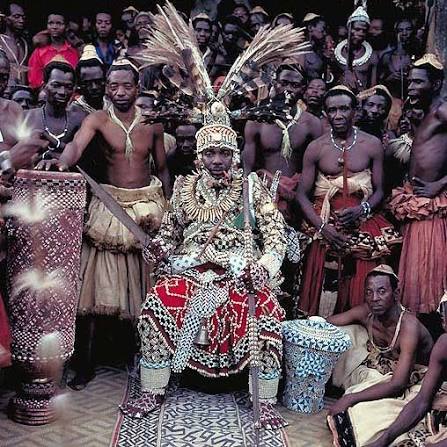
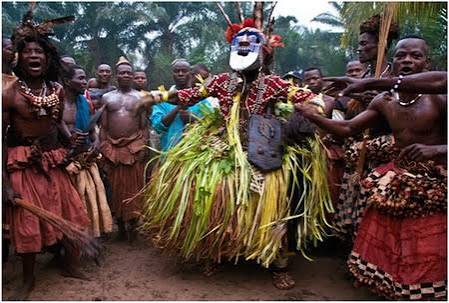
The Kuba tribe, also known as the Bakuba Tribe, compromises of about 16 Bantu-speaking groups in southeastern Congo (DRC.)
In the 16th century, the Kuba people migrated from the distant north to their current location along the Sankuru River. When they arrived, they found that the Twa people already lived there. The Twa were eventually absorbed into the Kuba Kingdom, but retained some independent cultural characteristics. The height of the Kingdom was during the mid-19th century. Europeans first reached the area in 1884, but the Kuba, being relatively isolated, were not as affected by the slave trade as many of the other tribes in the area. In the late 19th century, the Nsapo invaded and the Kingdom was broken up to a large extent.
The Kuba people have kept aloof from modern life, and few have emigrated or engage in European-style occupations. The groups are divided into lineages related through matrilineal descent; the lineages are segments of numerous dispersed clans..
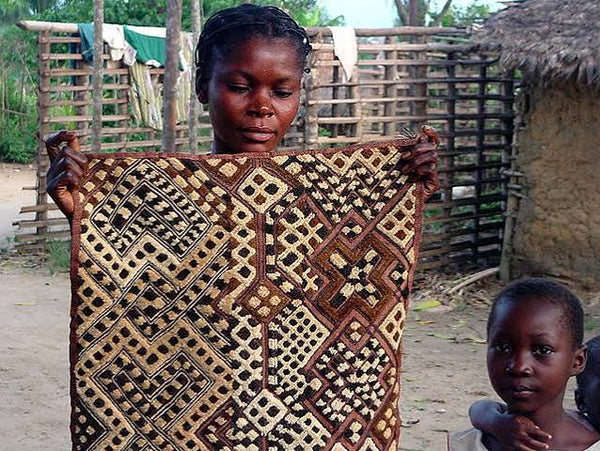
Nature spirits, the spirits of dead kings, and witchcraft dominate Kuba religion. Nearly all objects of daily use are decorated, and carved wooden figurines, initiation masks, cups, and beautifully embroidered handwoven raffia cloth are especially prized by collectors.
These handcrafted nineteenth-century fabrics were woven from raffia palm fibers and used in dowries; the larger ones served as festive attire at funerals. In fact, these cloths are renown worldwide for being of high quality in both design and technical achievement. Kuba cloths had been shown in early African art shows in Paris that the famous modernist Matisse may have attended, and he owned several Kuba cloths in his collection. Matisse’s correspondence indicates their inspiration for the paper cutouts, such as the 1951 Snow Flowers, that were his final major works. After hanging panels of the Kuba textiles across his studio walls, Matisse wrote in letters to his sister that he often looked at them for long periods, waiting for something to come to him.
In your home
Loading the room...
Surfaces
Pedestal
Styled with and outdoors
Rooms
The Tradition
African Wood Carving
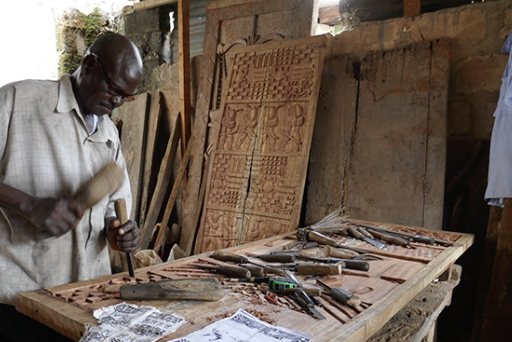
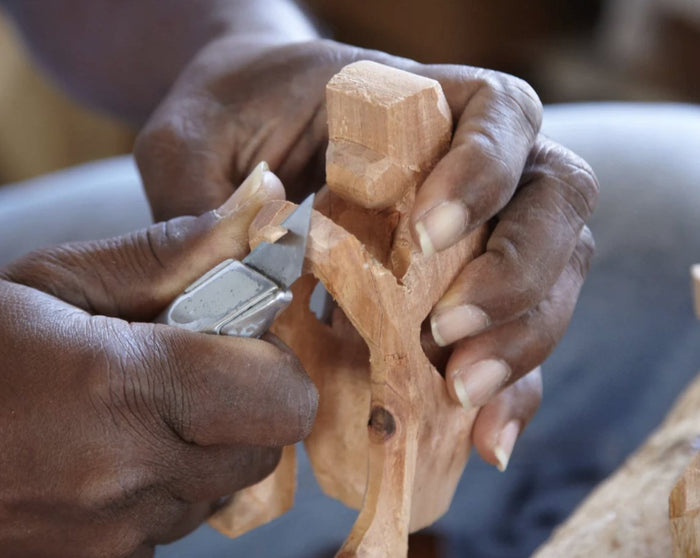
Wood has long been the great sculptural material of Africa. Carved from a single trunk, each piece carries the grain of the living tree and the marks of the hands and tools that shaped it.
- Wood
- Ebony, teak, jarrah, cherry and local hardwoods
- Made
- By hand, from a single block
- Tools
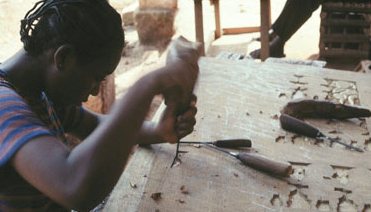
- Adze, knife and chisel
- Made for
- Ceremony, decoration and storytelling
The woods we carry
Ebony wood
A dense, heavy wood that grows slowly, with an almost black heart and pale outer wood from the same log that carvers often use together in one piece
Teak wood
A strong hardwood of warm golden brown, resistant to weather, that deepens in tone with age
Jarrah wood
A very dense, deep red hardwood that darkens to a rich reddish brown as it ages
Cherry wood
A wood with a fine, even grain and a warm reddish tone that grows richer the longer it is exposed to light
Related Pieces
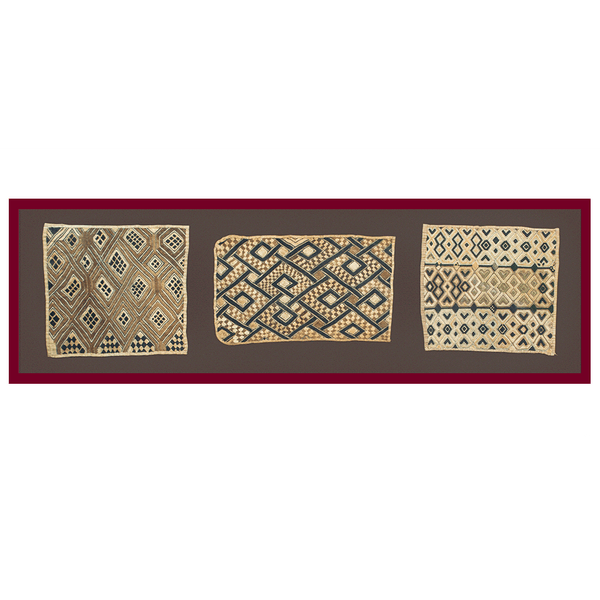
Democratic Republic of the Congo, Central Africa · Decor
Kuba Kloth Panels
$2,700
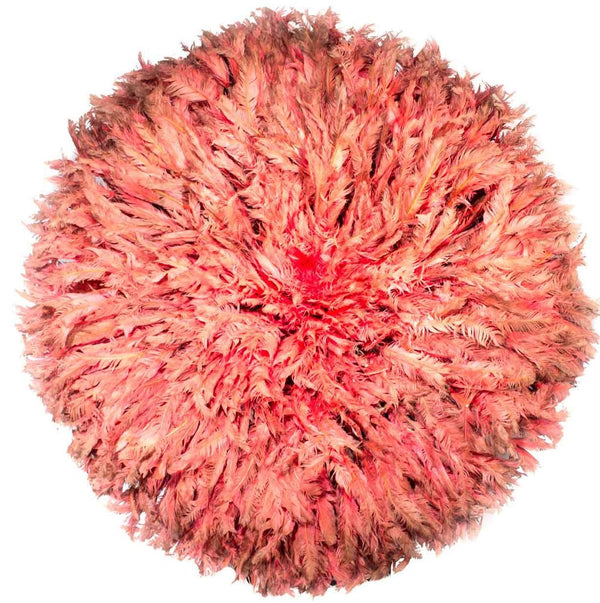
South Africa · Decor
Ostrich Feathers Wall Art
$550
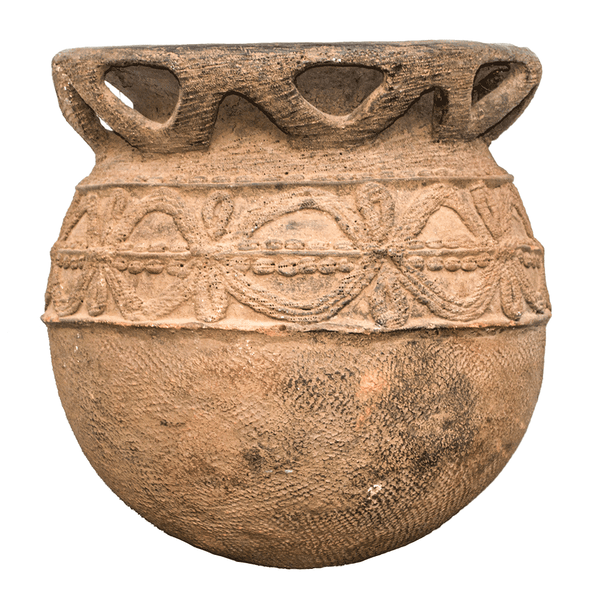
Cameroon, Central Africa · Decor
Aged Palm Wine Vessel
$2,999
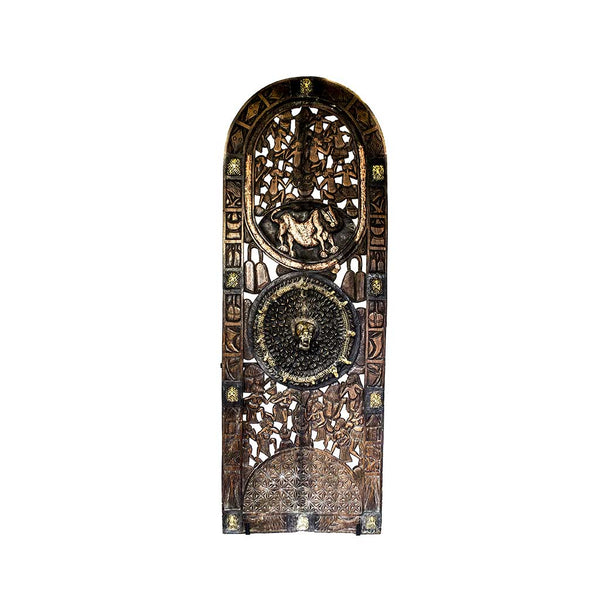
Cameroon, Central Africa · Decor
Royal Door
$5,400
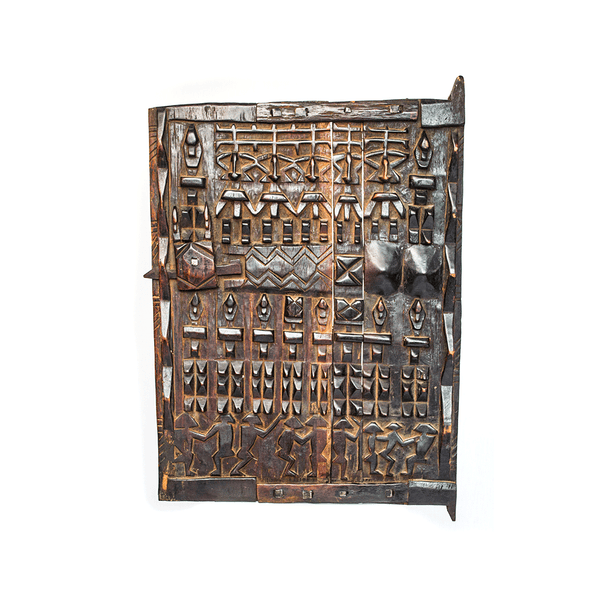
Mali, West Africa · Decor
Dogon Door
$3,500

Morocco, North Africa · Decor
Aged Moorish Door
$14,995
South Africa · Decor
Five Egg Ostrich Egg Lamp
$1,550
South Africa · Decor
Three Egg Ostrich Egg Lamp
$999