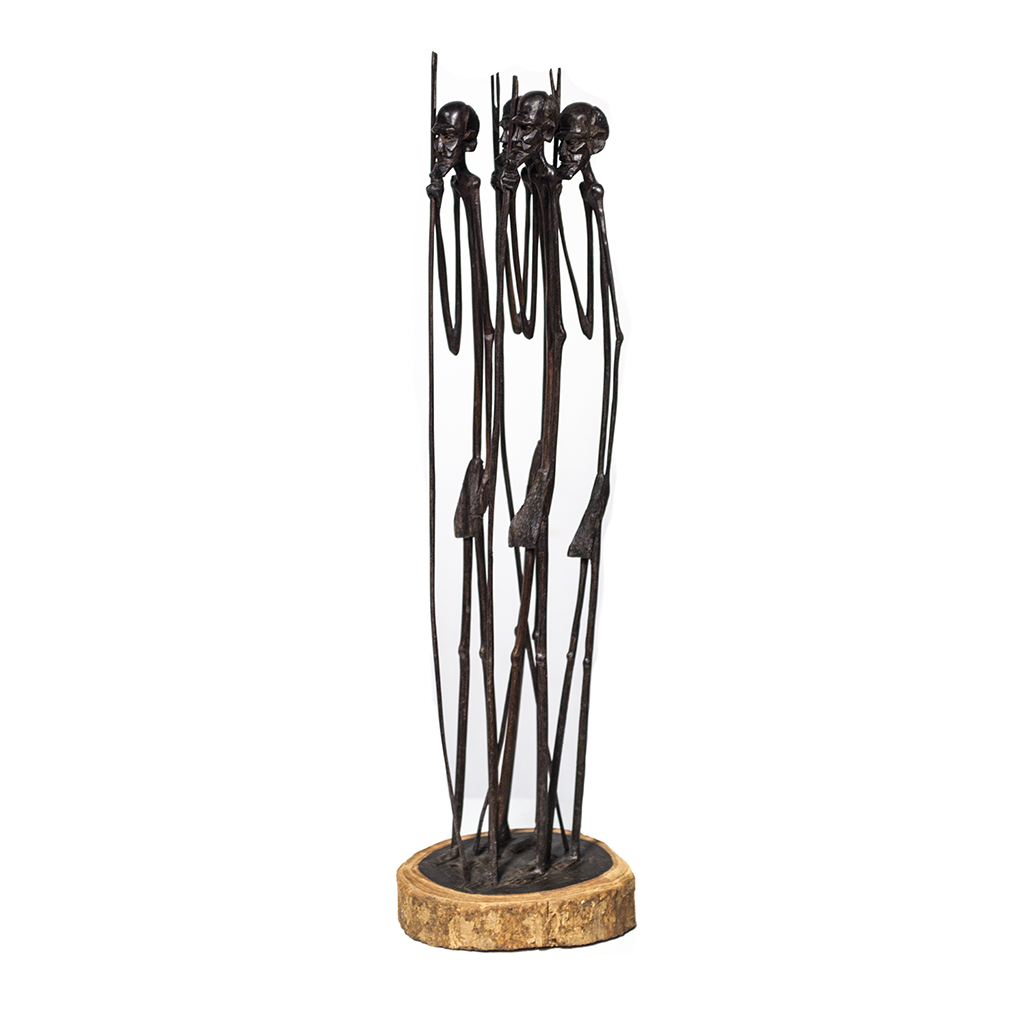
Kenya, East Africa · Ndonye Mwanzilo
Masaai Tribe
Piece #MS007 · Year Made: 1988
$650
Shipping individually quoted
Origin
Kenya, East Africa
Period
Late 20th Century
Medium
Hand Carved Ebony Wood
Length
3"
Width
3"
Height
10"
Details & Materials
The figures in "Masaai Tribe" stretch upward in the elongated style that defines Masaai carving, rising together from one piece of pure ebony. Available in two sizes, small and large.
It is the work of Ndonye Mwanzilo, whose medium is ebony alone and whose subject is Masaai life. Among the many carvers of the Machakos district in Kenya, he is regarded as the finest, and each of his pieces takes a great deal of time to complete. For Mwanzilo, carving is how the tradition and culture of the Masaai are kept alive.
- Condition: Excellent, not previously owned, undamaged
- Sourcing: Fair Trade
- Certificate of Authenticity: Available Upon Request
- Provenance Report: Available Upon Request
Shipping
Buy now and leave the shipping to us. At checkout you pay for the piece plus a shipping deposit. We then plan the packing for your piece and email you the remaining shipping balance. This applies to both domestic and international orders. Every shipment is tracked, and most deliveries need a signature.
- Domestic: 5-8 business days
- International: 10-14 business days
- White-glove delivery available on request
Care & Placement
Dust with a soft, dry cloth. Keep away from radiators, direct sunlight, dampness, and any sudden change of temperature. Do not place in extremely cold areas.
Place the piece on a level surface
Origin
Kenya
East Africa
"When I was first exposed to African art, I felt a deep connection to it. It is hard to explain. It resonates with me spiritually."
Michael, Founder
York's Shona Gallery was the first in New York City to bring African sculpture to American collectors. Every piece in our collection is acquired directly, ensuring authenticity and fair exchange with the artists and communities who create them.
About the Artist
Ndonye Mwanzilo
Wood Sculpture
Ndonye Mwanzilo was born in 1964 into a family of ten in the village of Wumunyu, located in the Machakos district of Kenya. Due to the financial difficulties of Mwanzilo’s family, his formal academic education ended after he completed the eighth grade. The financial reality in his district makes finding a profession very difficult for young people. Mwanzilo was fortunate to come from a family of trained sculptors; and soon after leaving school, he was incorporated into his father’s profession of wood carving.
Mwanzilo began to apprentice with his father at the early age of thirteen. He successfully mastered rudimentary wood carving techniques and soon after graduated to carving in the challenging medium of ebony wood. He absorbed the style and techniques of other great carvers from his district, known for its long wood carving tradition.
The district of Machakos is renowned for its rich mahogany and ebony wood carvings, due in part to the accessibility of trees that grow slowly and develop dry and dense inner cores, making them challenging mediums for wood carvers. These trees are also sought after for their rich color and resistance to cracking and splitting. Ebony wood is especially prized for its naturally black core, which is highlighted by a light-colored exterior. The contrast is dramatic and beautiful. Ebony wood is also known to be extremely dense, and is one of the few woods in the world that sinks in water. Its uses are wide, varied, and found in limited regions throughout the world.
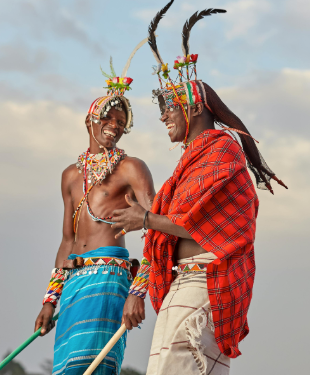
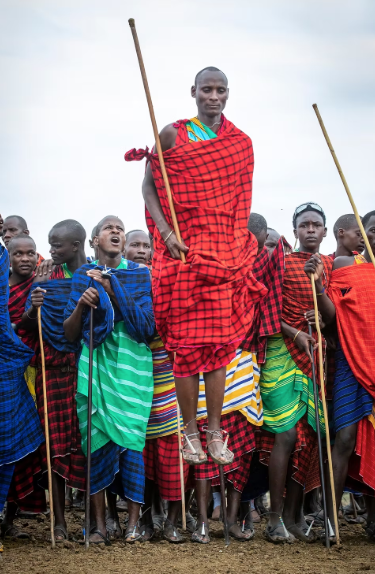
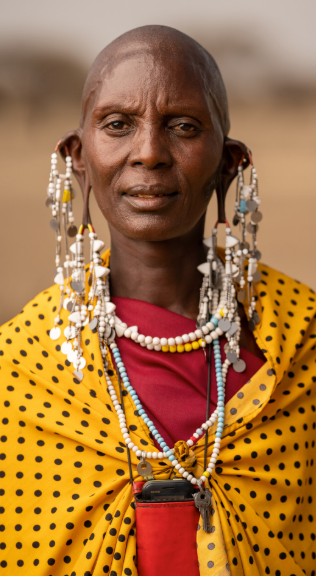
Mwanzilo is a dedicated sculptor working exclusively in ebony to carve his refined “Masaai Tribe” figures. His characteristic detailed work demands great patience and a great deal of time to complete. Each piece is carved with a steady and most skillful hand. He is widely acknowledged to be the finest among the many ebony wood carvers from the Machakos district. The recurrent themes of his work reflect Masaai tribal life. Mwanzilo believes art is a powerful and essential medium in which to preserve the tradition and culture of Masaai life.
In your home
Loading the room...
Surfaces
Pedestal
Styled with and outdoors
Rooms
The Tradition
Ebony Wood
Ebony wood is one of the most valuable, rare, and expensive types of wood in the world; prized for its dark core.
- Grows
- Slowly, over many decades
- Color
- Near black heart, pale outer wood
- Made
- By hand, from a single block
- In the wild
- Endangered
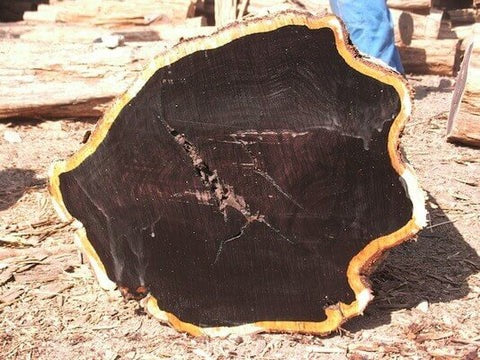
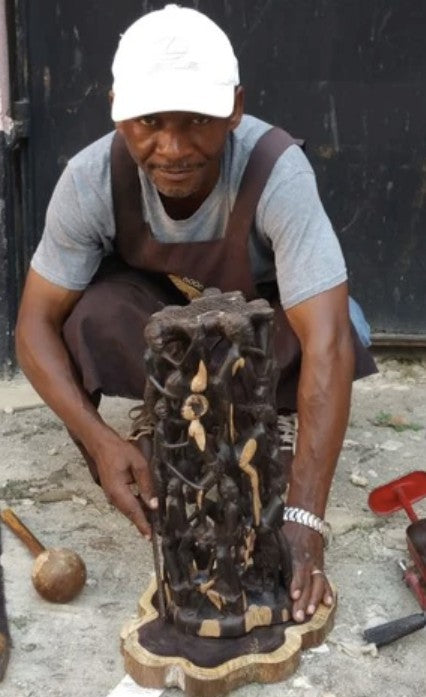
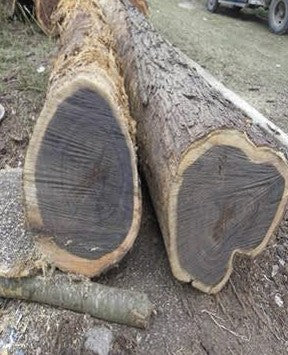
Inside an ebony log
Heartwood
The near black center of the log, the part most prized for carving
Outer wood
The pale layer under the bark, often left on the base as a contrast to the dark figure
Related Pieces
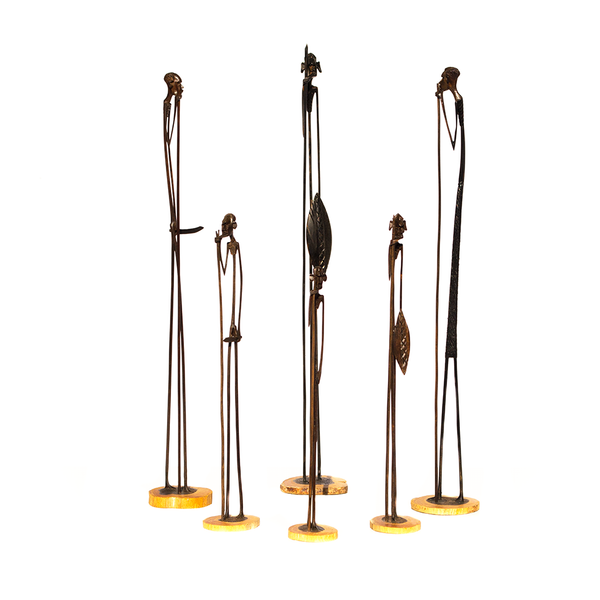
Kenya, East Africa · Wood Sculpture
Masaai People
$159
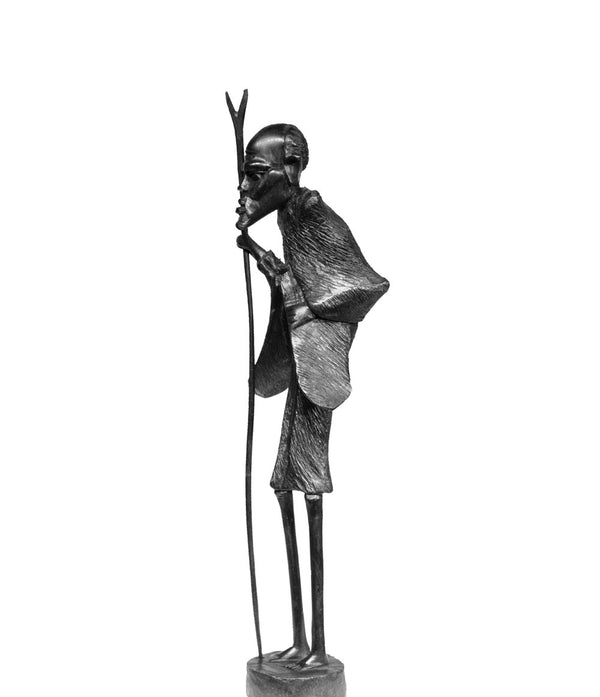
Kenya, East Africa · Wood Sculpture
Masaai Old Man
$275
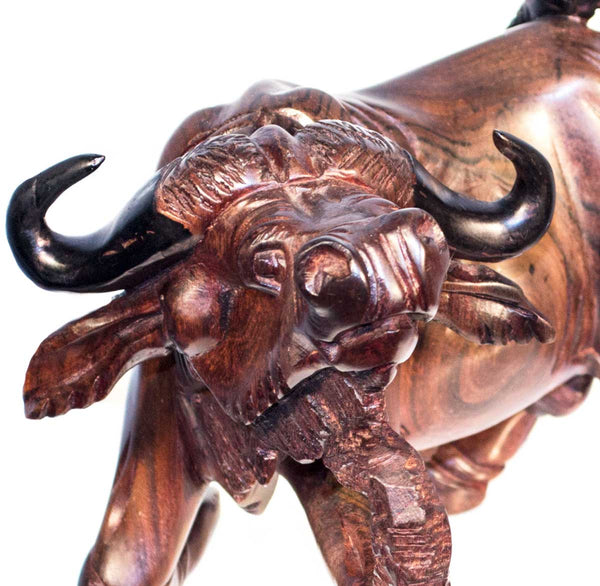
Kenya, East Africa · Wood Sculpture
Buffalo
$1,499
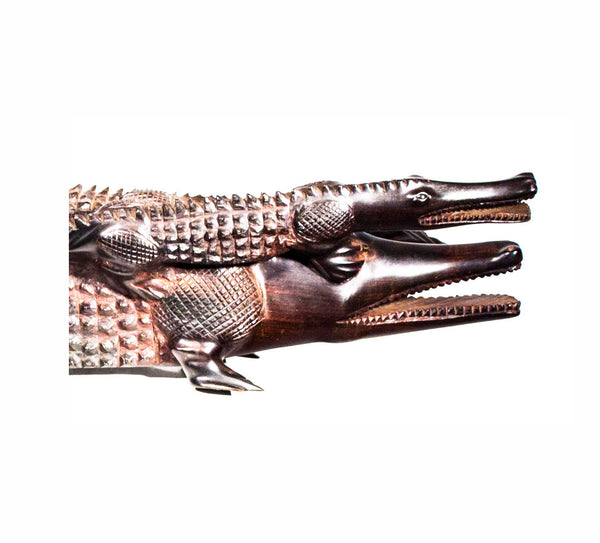
Kenya, East Africa · Wood Sculpture
Crocodile
$2,999
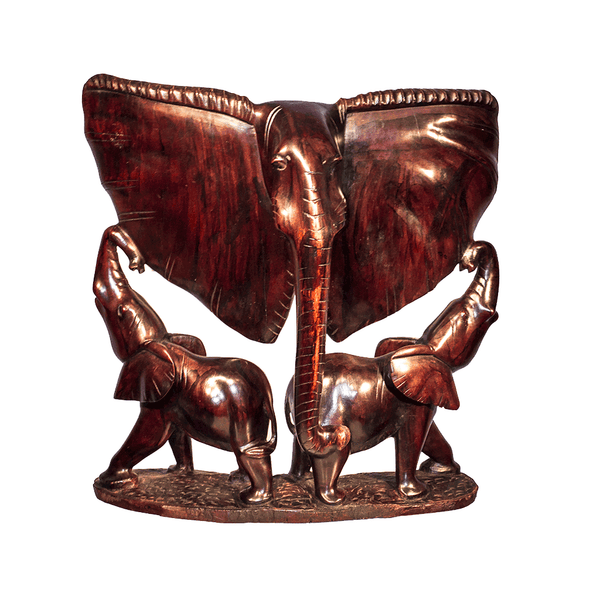
Kenya, East Africa · Wood Sculpture
Mother and Children
$1,999
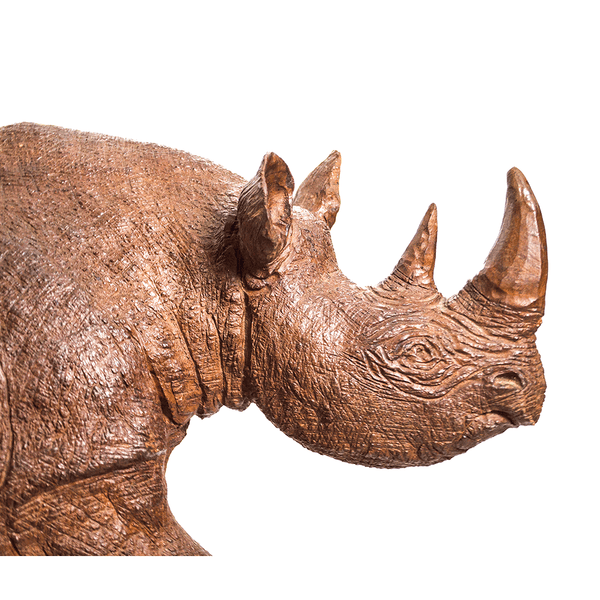
Kenya, East Africa · Wood Sculpture
Rhino
$3,999
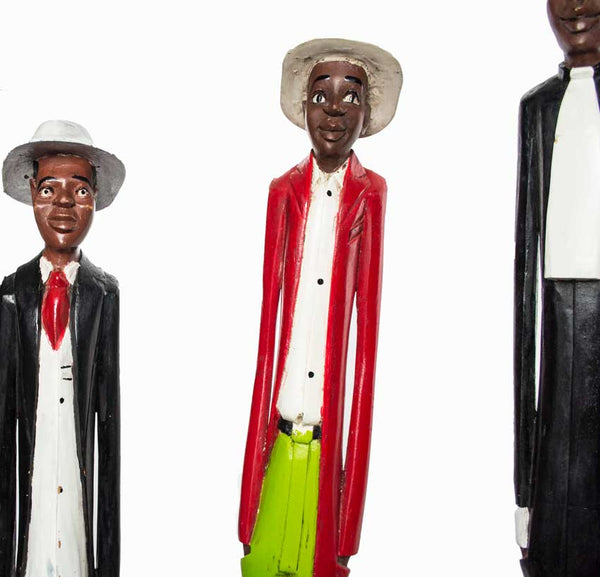
Ivory Coast, West Africa · Wood Sculpture
Colonial People
$499
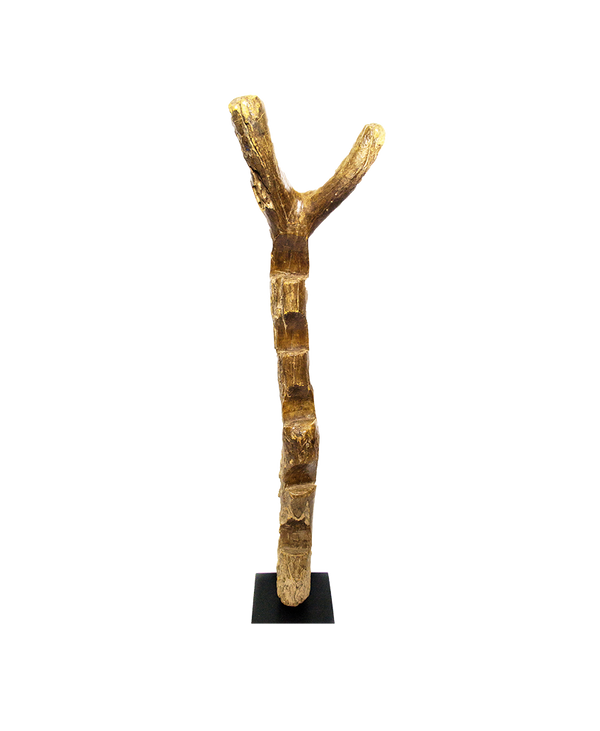
Mali, West Africa · Wood Sculpture
Ladder
$3,199